DE
DE  FR
FR  IT
IT 
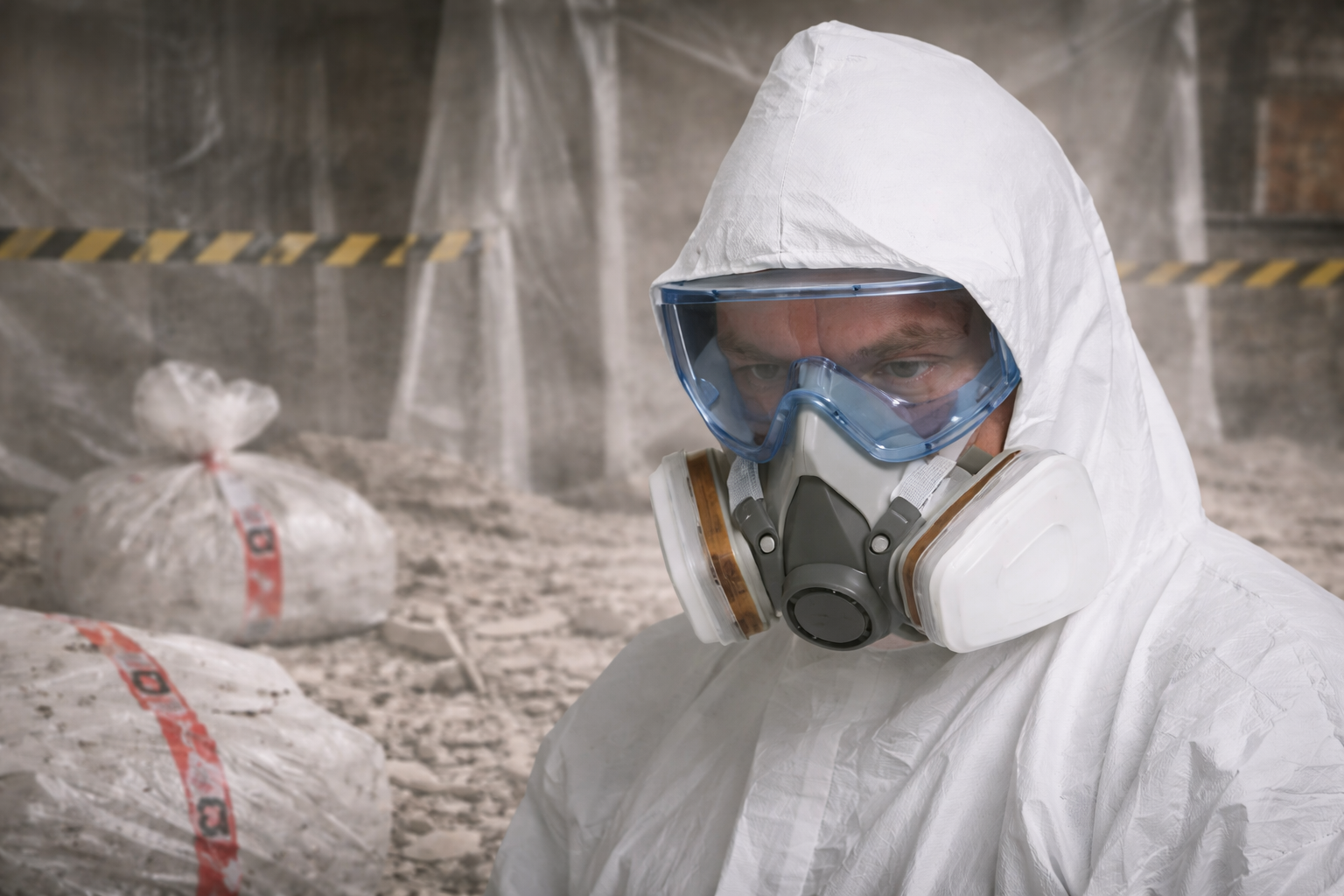
Asbestos protective equipment falls into 5 mandatory categories: filtering respiratory devices with FFP3 half masks or powered air ventilation.
-
French regulations require CE-certified PPE for any work involving asbestos-containing materials, with criminal penalties in cases of non-compliance
-
The choice depends on the level of dust exposure: subsection 3 (limited work) or subsection 4 (heavy-duty sites)
-
Inadequate equipment increases the risk of exposure to carcinogenic fibers by a factor of 10
Type 5/6 disposable coveralls, resistant gloves, safety footwear, and sealed eye protection. Asbestos still causes 3,000 deaths every year in France. Some sites still begin work with inadequate protection.
Legislation is strengthening inspections of this equipment. Frankly, many companies still confuse the insufficient FFP2 mask with the legally required FFP3. That mistake leads to serious consequences: fines, work stoppages, and irreversible health risks for your teams.
Here you will find the 5 mandatory PPE categories, the selection criteria according to your type of work (removal, encapsulation, demolition), and the common mistakes that cancel out protection. Lesser-known regulatory aspects deserve your attention: maximum wearing time, compatibility between items of equipment, and the real cost of full compliance.
Oxwork supports you in securing your sites with a methodical approach.
Why is asbestos protective equipment essential?
Asbestos continues to cause deaths every year among exposed workers. These exposures lead to serious and irreversible diseases in thousands of people.
Some professionals still underestimate these dangers, thinking that brief exposure has no consequences. Frankly, that belief is wrong.
A single inhaled fiber can cause cancer two decades later. Protective equipment is an essential barrier between your lungs and these dangerous particles.
The real dangers of asbestos to health
Breathing in these fibers triggers severe diseases that are usually detected far too late. Asbestos destroys lung tissue with no possibility of repair. Frankly, the main conditions observed include asbestosis (progressive pulmonary fibrosis), pleural mesothelioma (a fatal cancer of the pleura), and several bronchopulmonary cancers.
No curative treatment can heal them. The latency period often ranges from fifteen to forty years, which makes primary prevention absolutely indispensable.
What does French law say?
French regulations impose specific obligations on companies. Standards NF X 46-010 and NF X 46-011 define three risk levels to govern interventions (subsections SS3, SS4).
Oxwork offers equipment that complies with these mandatory standards. Companies must obtain valid certifications for each trained operator.
Frankly, non-compliance exposes companies to criminal penalties: heavy fines, administrative closure, and legal proceedings in the event of an accident.
The employer remains fully responsible for the safety of their teams. Using unsuitable disposable masks or failing to replace filters puts your staff at risk.
Well-equipped companies avoid serious accidents and costly litigation.
The 5 categories of asbestos PPE every professional should know
When dealing with asbestos, half measures are not enough. Asbestos protective equipment is divided into five complementary categories, each meeting precise standards.
Frankly, understanding these distinctions helps you avoid costly mistakes in the field. Here is how to choose the right equipment according to the level of risk.
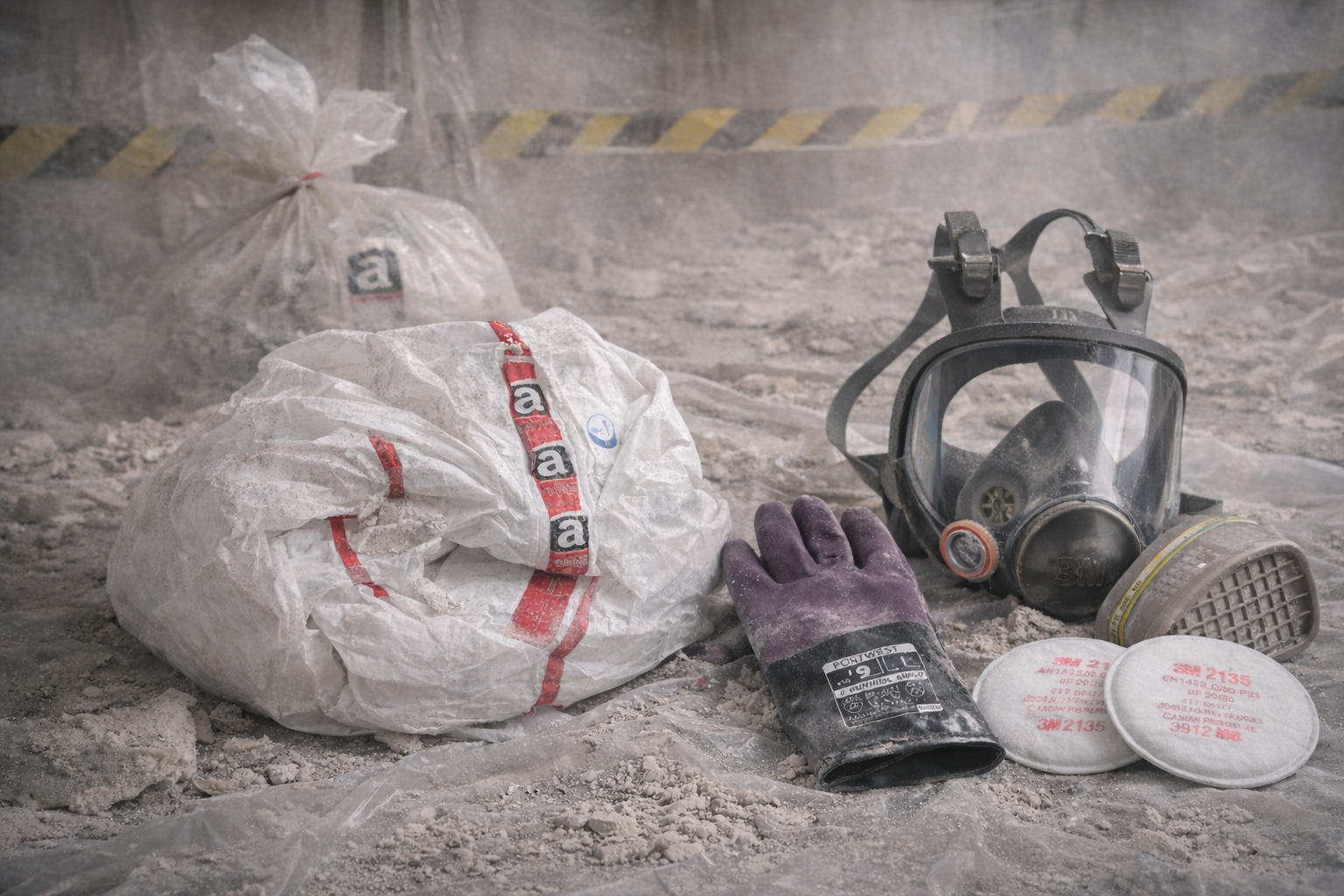
Respiratory protection, the vital shield against fibers
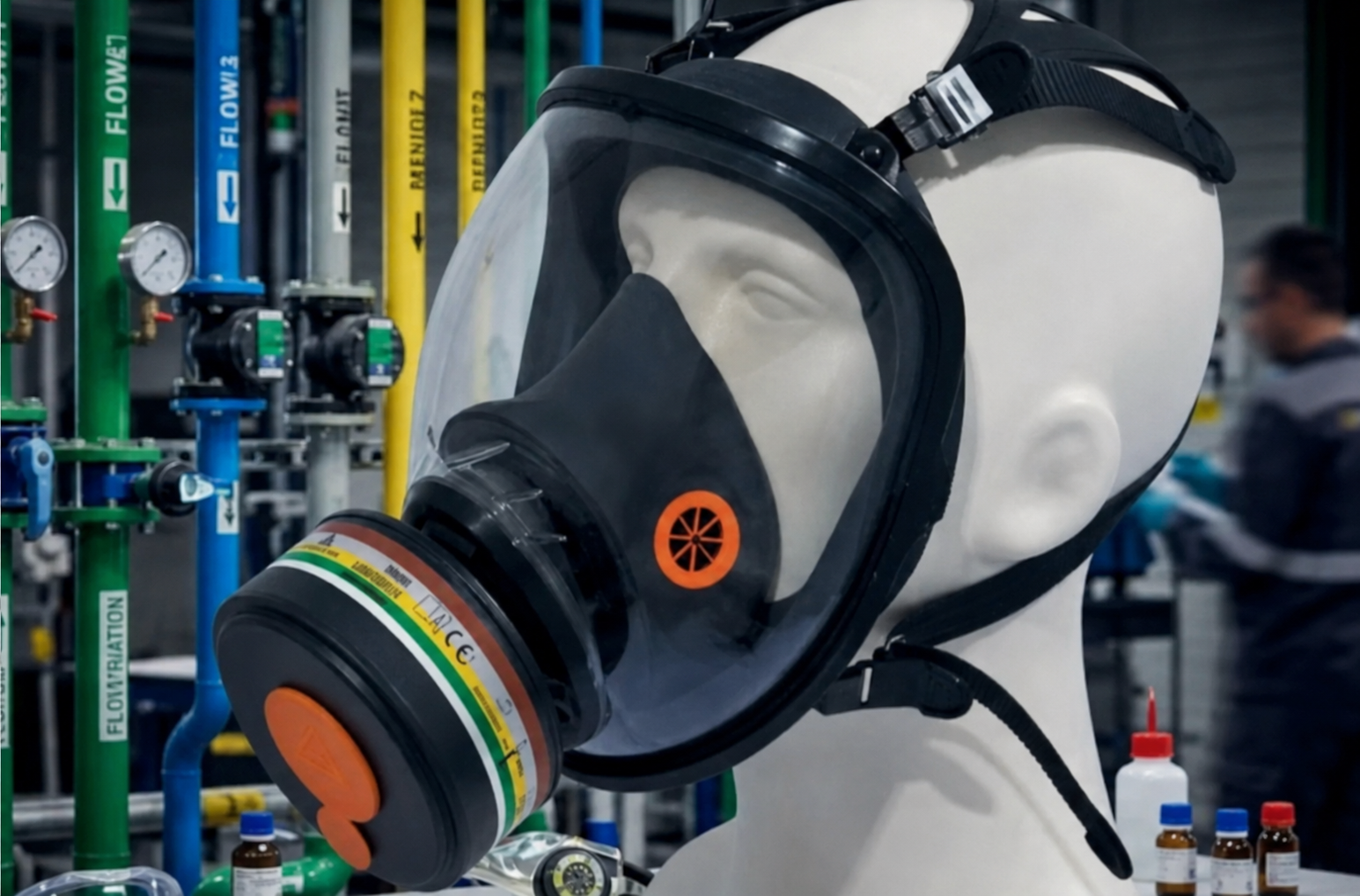
Respiratory protection is the first line of defense against exposure to asbestos fibers. Powered respiratory protective devices comply with NF EN 12941 and 12942 standards, ensuring optimal filtration.
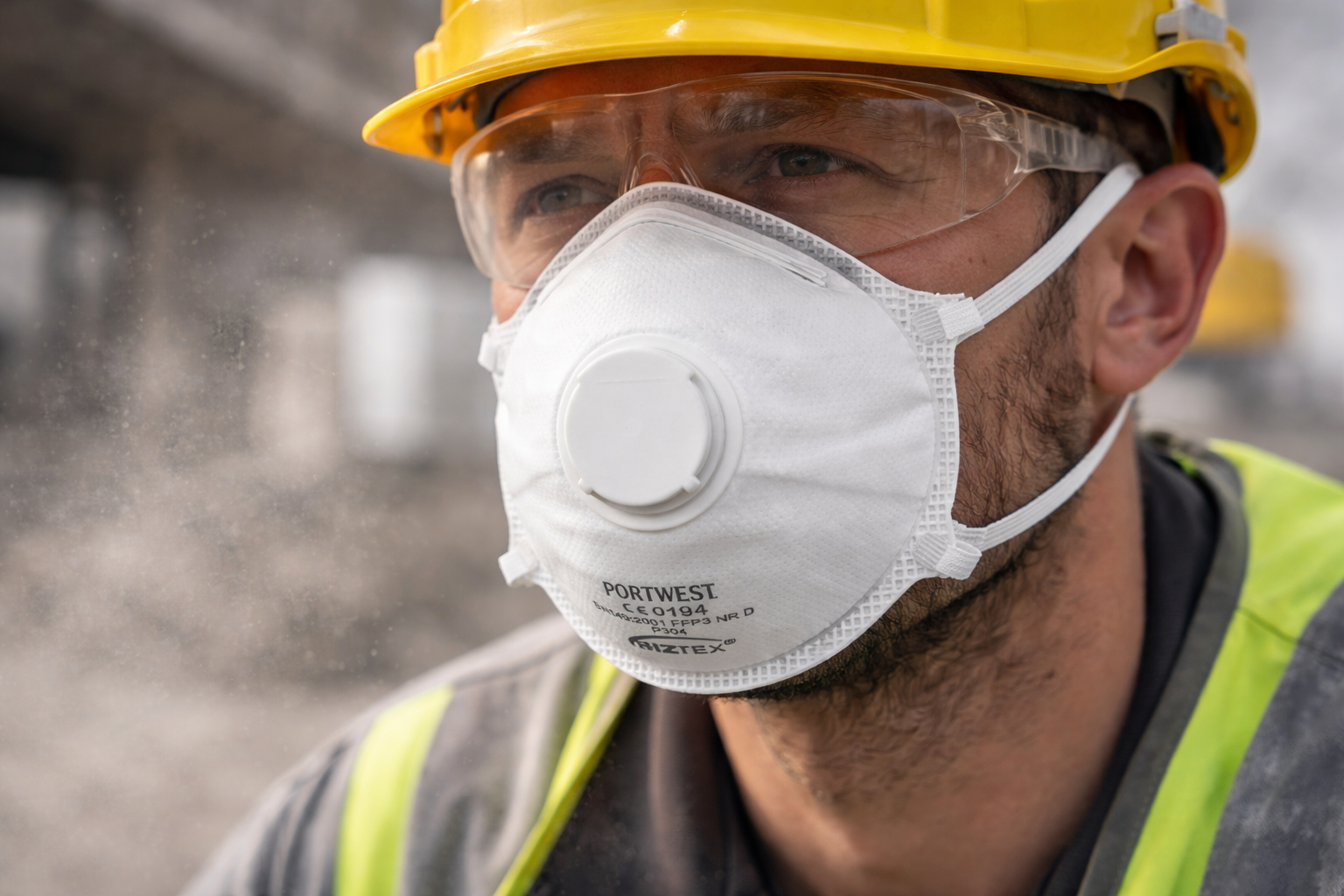
These devices create positive pressure that prevents any infiltration of dangerous fibers. Frankly, for short operations, FFP3 masks offer a certified and effective alternative.
ANSES recommends increased vigilance regarding wearing times depending on the type of fiber encountered. FFA (fine asbestos fibers) and FCA (short asbestos fibers) require specific and appropriate assessments. Each type has distinct exposure limits that professionals must strictly follow for their safety.
Clothing and accessories, a complete barrier
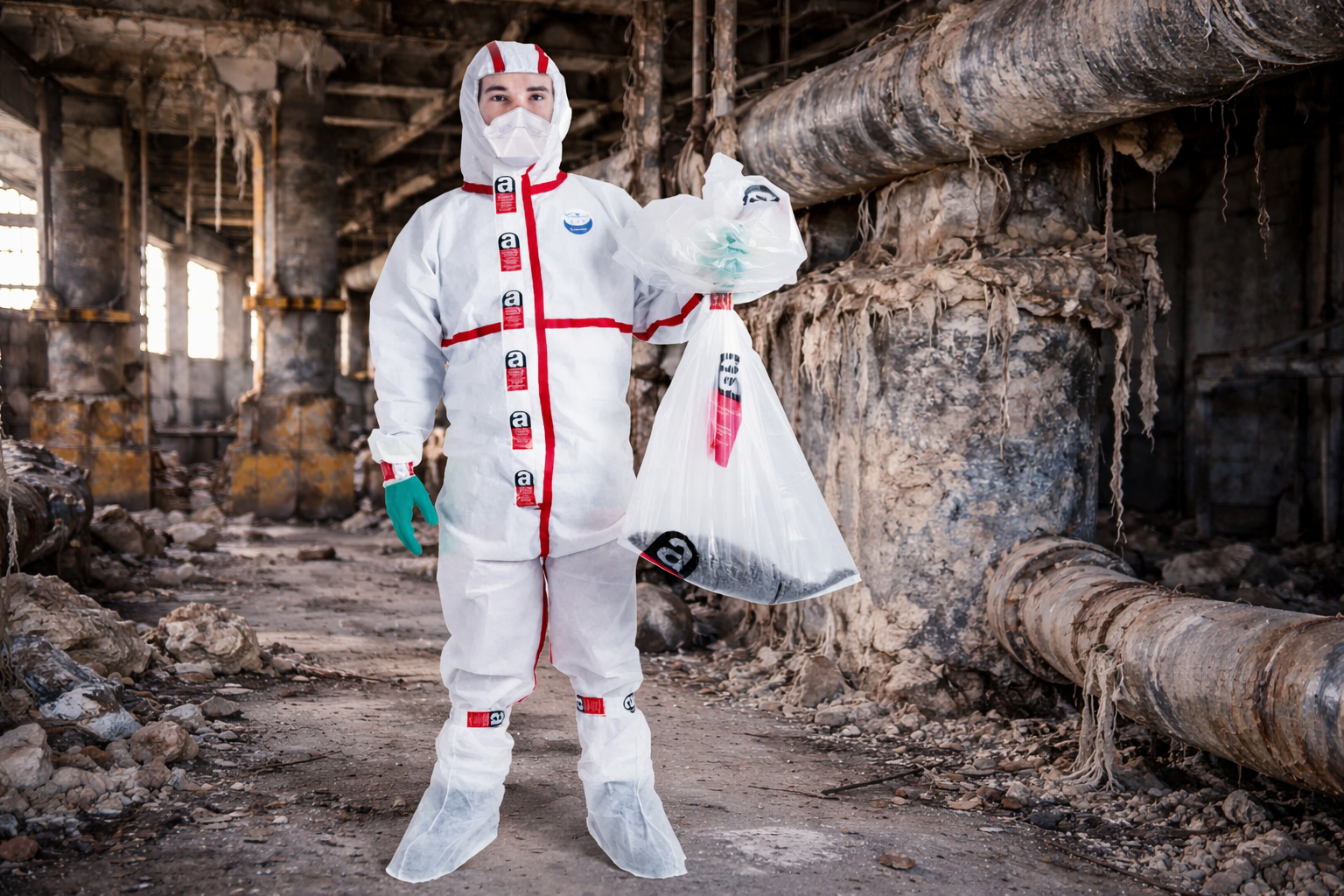
Type 5 and 6 protective coveralls form your second line of defense against asbestos. They must be chosen according to the dust level measured directly on your worksite.
Type 5 is suitable for dry particles, while type 6 is required for liquid splashes. This equipment must remain fiber-tight while still ensuring sufficient freedom of movement.
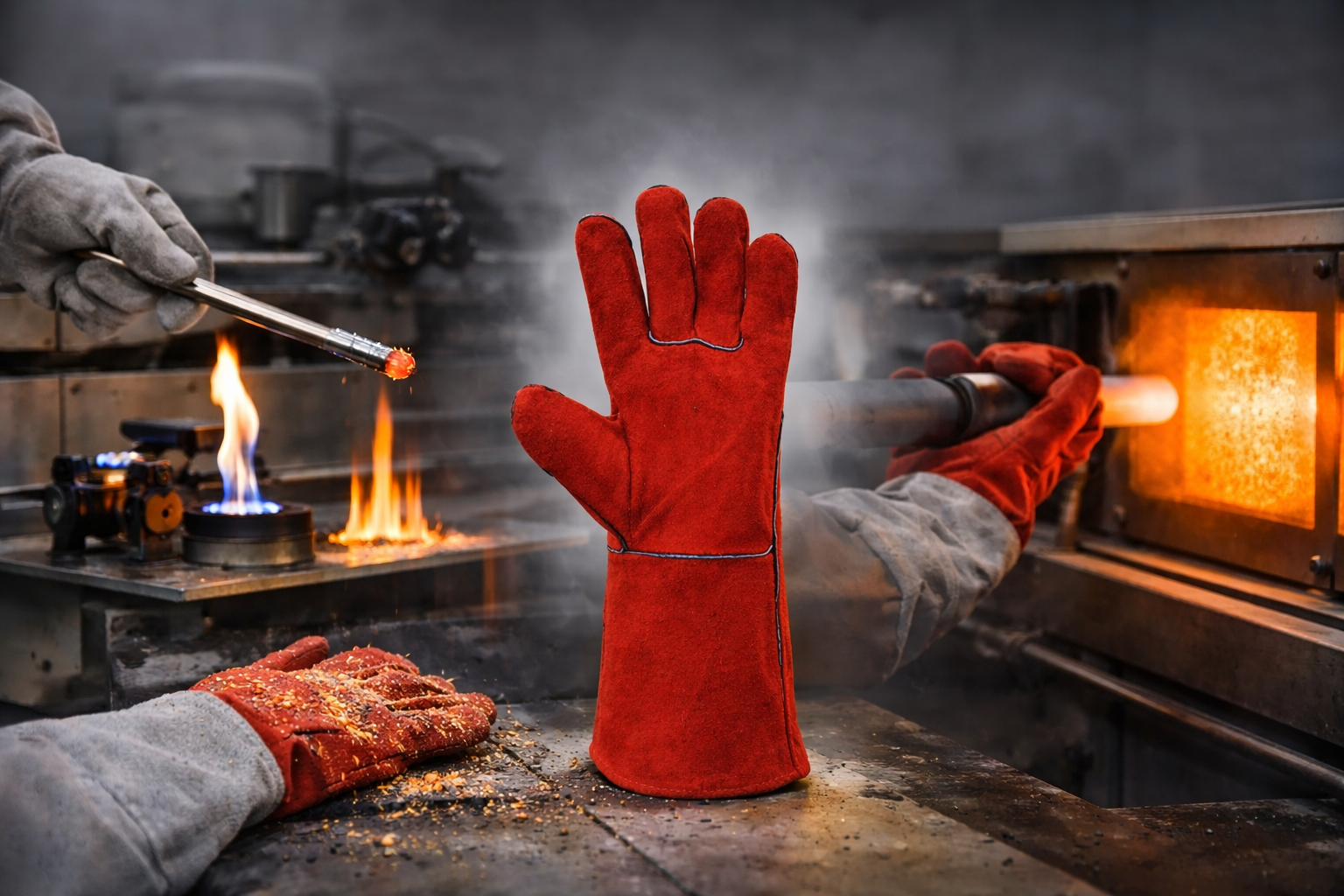
Frankly, you should complete this protection with suitable gloves and footwear. Three criteria determine your choice: mechanical resistance during handling, total sealing against microscopic fibers, and comfort over several hours.
Sealed overshoes prevent any cross-contamination when you leave the work area. Hoods and goggles protect exposed areas that your coverall does not cover.
Each accessory complies with NF X 46-020, which strictly governs asbestos operations in France.
How do you choose your PPE according to the type of asbestos site?
Your subsection defines your asbestos protective equipment. An SS3 site in a confined environment does not require the same protection as an SS4 operation in an open environment.
Frankly, this technical distinction directly affects the choice of respiratory protective devices and suitable coveralls. Ignoring these criteria exposes your teams to varying concentrations of asbestos fibers, with measurable health consequences.
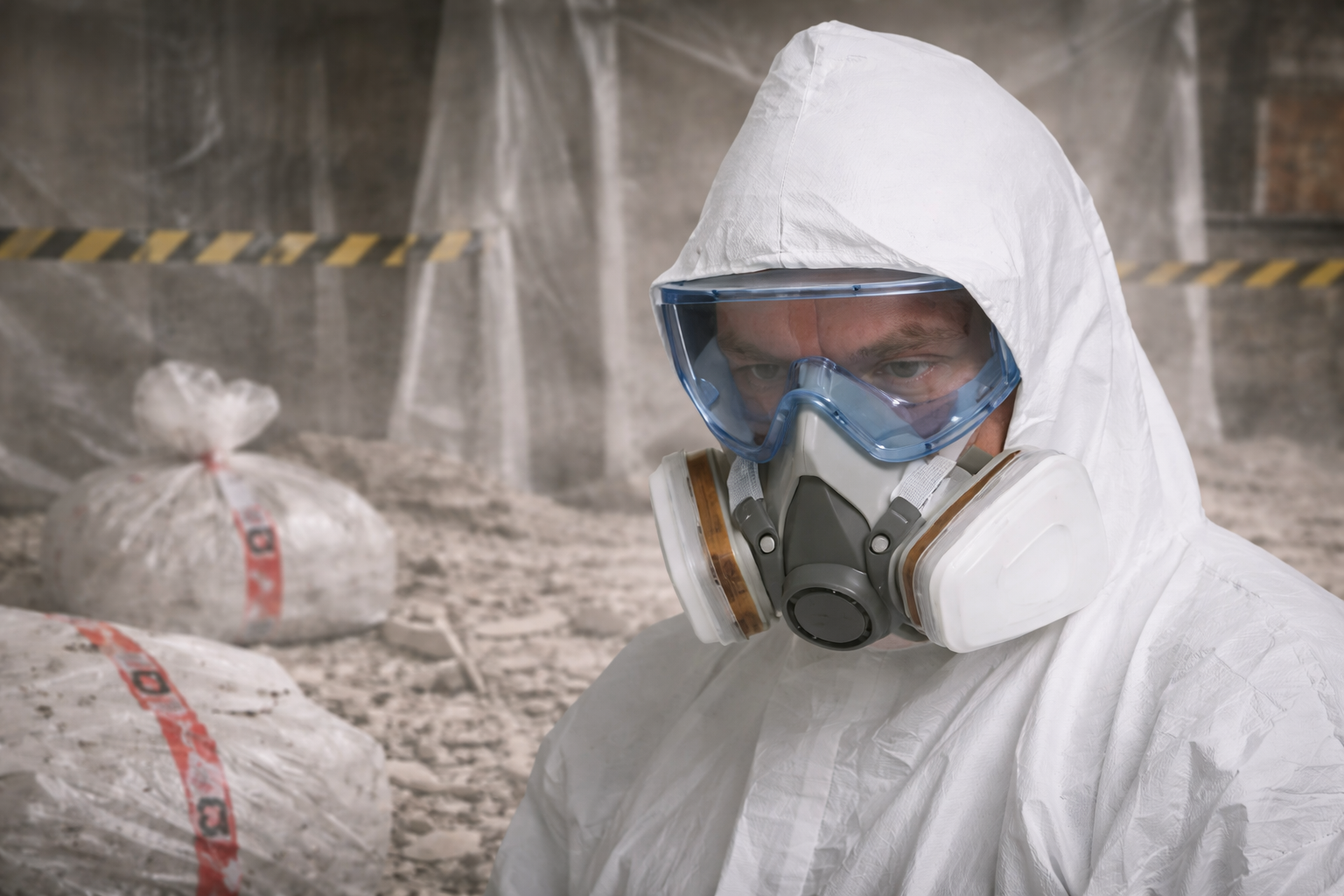
Adapting protection to the site’s risk level
Subsection 3 worksites require TM3P powered respirators and sealed coveralls for full containment. Subsection 4 allows FFP3 masks during short operations in open environments. Frankly, you need to assess the dust level in order to choose the right respirator.
The duration of the operation determines the level of autonomy you need. A 6-hour worksite in summer requires effective ventilation to counter heat stress and dehydration.
-
Operation duration: powered respirator if more than 2 continuous hours
-
Ambient temperature: reinforced ventilation above 25°C
-
Required mobility: lightweight backpack system for confined spaces
-
Compatibility: check connections between mask, hose, and filtering unit
ANSES recommendations for long exposure periods
In 2009, ANSES pointed out that standards NF EN 12941/12942 cover free asbestos fibers and chrysotile, but require adaptation for prolonged operations. Specific exposure limits by fiber type still need further refinement.
Choose constant-flow respirators rather than pulsed-flow models to maintain continuous positive pressure. Frankly, check the compatibility between your ventilated coverall and the selected powered unit.
Oxwork advice: create a selection matrix combining subsection (SS3/SS4), operation duration, and temperature to guide your purchases of asbestos protective equipment. Systematically test respiratory comfort before field deployment.
What asbestos removal companies do not tell you
How many companies really mention the actual service life of their asbestos protective equipment? Not many.
Manufacturers often claim 5 years for a powered assisted respirator, but in real field conditions, with three intensive worksites per week, you will struggle to reach 18 months before the seals start showing signs of wear. This gap between commercial promise and reality is expensive, especially when you realize too late that your equipment needs early replacement.
The real costs no one mentions
Beyond the purchase price, several costs are often overlooked by companies. The periodic inspections required by the Directorate General for Labour cost between 150 and 400 euros per device, depending on its complexity.
Frankly, controlled storage in a ventilated and air-conditioned cabinet represents at least 800 euros per year. You also need to plan for filter maintenance, cartridge replacement, and monthly leak-tightness checks.
In the end, equipment purchased for 1,200 euros can easily generate 600 euros in additional costs every year.
What is missing from current certification standards
NF X 46-010 certification represents a minimum legal threshold, without any total guarantee of safety. Back in 2009, INRS already noted that standards for respiratory devices are suitable for free fibers and chrysotile. On the other hand, these standards need to be revised for certain prolonged field exposures.
Frankly, the national DGT/DGPR plan is specifically aimed at strengthening detection and the reliability of operations. Yet many companies still stick to the strict regulatory minimum and ignore the real risks. Some fibers require protection levels far higher than the standards currently in force.
Saving 300 euros today may cost you 15,000 euros tomorrow in litigation or work stoppages. (See also: ANSES)
Frequently asked questions about asbestos protective equipment
Asbestos protective equipment raises many questions. Choosing the right equipment is not enough. You also need to understand regulatory obligations and best practices for use.
Let’s look at the answers to the questions our customers ask regularly.
Certifications and regulatory compliance
Which certifications are mandatory? In France, EN 14605 is required for type 4 coveralls, while masks must comply with EN 149 (minimum FFP3).
Without these CE markings, it is impossible to prove your compliance during an inspection. Gloves require EN 374 certification for chemical protection.
How often should this equipment be replaced? FFP3 masks must be changed after each operation or every 8 hours at most.
Disposable coveralls must be discarded after single use.
Daily use and maintenance
You must store this protective equipment in a dry area, away from direct light and extreme temperatures.
The French Labour Code requires specific subsection 4 training for asbestos-related work.
Frankly, before each use, visually inspect every piece of equipment to check its integrity.
-
Tears or punctures on the coverall
-
Loose elastic bands at the wrists and ankles
-
Functional mask exhalation valve
-
Soft and intact mask seals
In the event of a failure during the operation, leave the contaminated area immediately. Then follow the decontamination procedure and report the incident to your safety manager.
Protect your teams with the right asbestos protective equipment
You now know the criteria for selecting the right PPE for your asbestos worksites. P3 filtering respiratory masks, type 5 coveralls.
Sealed gloves and certified safety footwear ensure the health protection of your teams and help you avoid legal penalties. Start by taking inventory of your current stock.
Frankly, check expiry dates, verify EN certifications, and identify any missing equipment for your upcoming operations. Are you looking for asbestos protective equipment that complies with standards?
Oxwork offers you a complete range of certified PPE, with fast delivery throughout France. Our catalog includes disposable or reusable P3 masks, type 5/6 coveralls, reinforced nitrile gloves, and S3 footwear. Every product meets French and European regulatory requirements.
Your team deserves uncompromising protection.