DE
DE  FR
FR  IT
IT 
The choice of a Delta Plus: respiratory mask depends on the duration of your task and the nature of the substances handled. Asbestos removal is not managed the same way as cutting drywall with a jigsaw.
This is not just a matter of comfort on a worksite. Breathing in silica dust, solvent vapors, or paint aerosols without proper protection leads to irreversible health conditions. Choosing a Delta Plus: respiratory mask requires a thorough analysis of your work environment. The risk is often invisible, but the health data is clear: prolonged exposure to dust without adequate filtration significantly reduces lung capacity in the medium term.
Why is respiratory protection crucial in your workplace?
In construction or the chemical industry, the threat is threefold: solid particles, organic vapors, and toxic gases. Fine dust, especially silica from concrete or wood fibers, can bypass the body’s natural defenses if workwear is not complemented by certified respiratory PPE. For complete safety, remember that your outfit should also include durable work pants and professional footwear suited for slippery surfaces. Compliance with European standards is not an administrative suggestion—it is your only guarantee of effective filtration. EN 149 governs disposable filtering half masks, while EN 140 covers reusable half masks. For environments where eye protection is also required—acid splashes or irritating gases—EN 136 defines the requirements for full-face masks. In the field, ignoring these standards is equivalent to working with ineffective equipment. However, identifying the pollutant is only the first step. You must then calibrate the technical response based on concentration and exposure time. A common mistake is using a simple dust mask against welding fumes. This is a typical case where one believes they are protected, while metallic fumes pass through the filter media. Nevertheless, the technical expertise of Delta Plus products makes it possible to cover these specific risks with durable and certified materials.
Reusable Half Masks: M6000 Series
The M6000 series, particularly the M6400 JUPITER, is the standard for professionals who frequently change job sites. These models, made of silicone or TPE (thermoplastic elastomer), offer an optimal balance between weight and sealing. The main advantage lies in modularity: you keep the mask and simply change the cartridges depending on the application (painting, sanding, phytosanitary treatment).
Full-Face Masks: M9000 Series
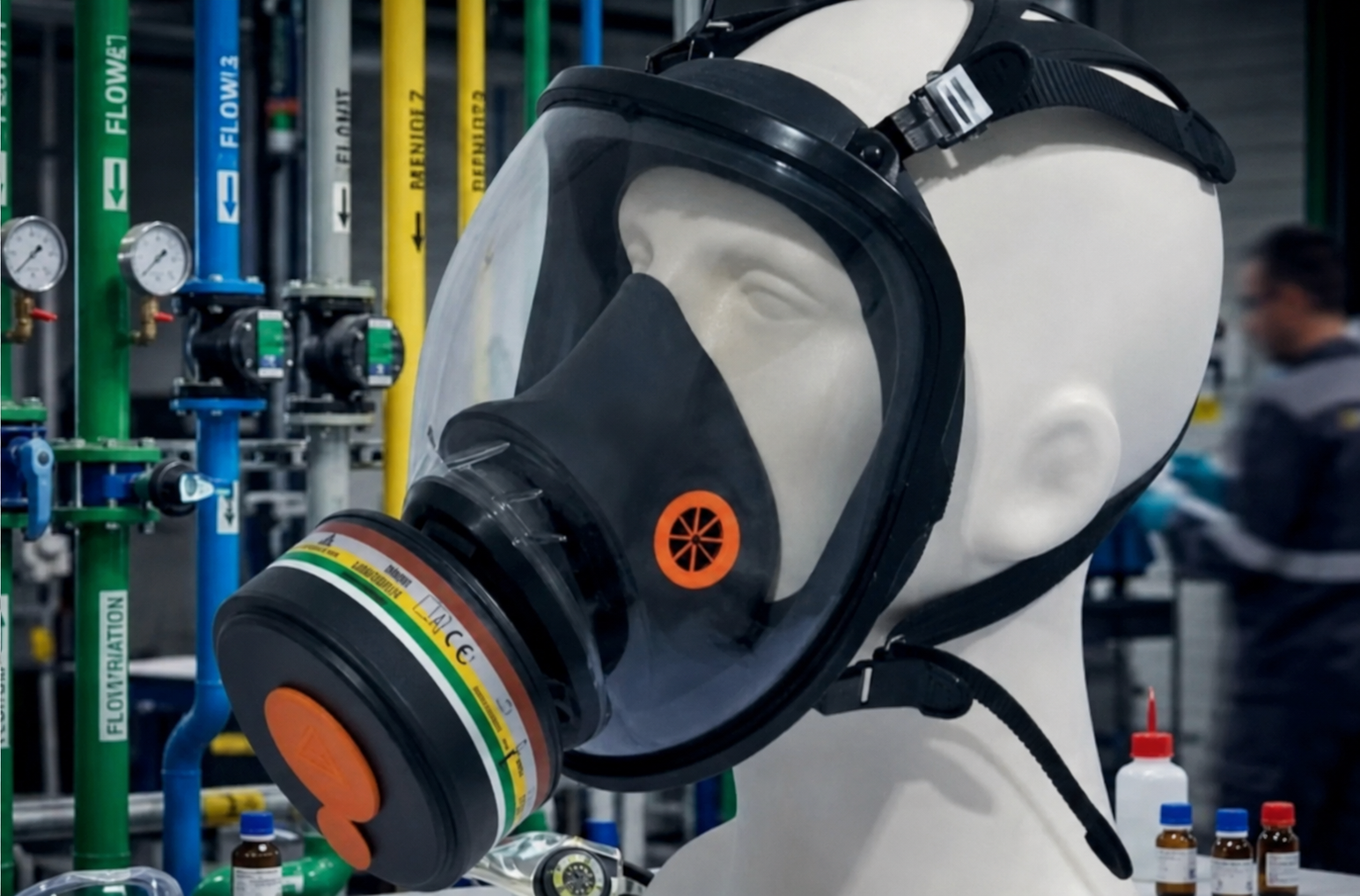
For total safety, a full-face mask like the M9200 ROTOR GALAXY is essential. Here, protection extends to the eyes thanks to a polycarbonate visor. This is the required equipment in closed industrial environments or during heavy chemical handling. Note that the rotor tightening system makes it easy to put on even with thick protective gloves.
Disposable Masks: FFP2 and FFP3
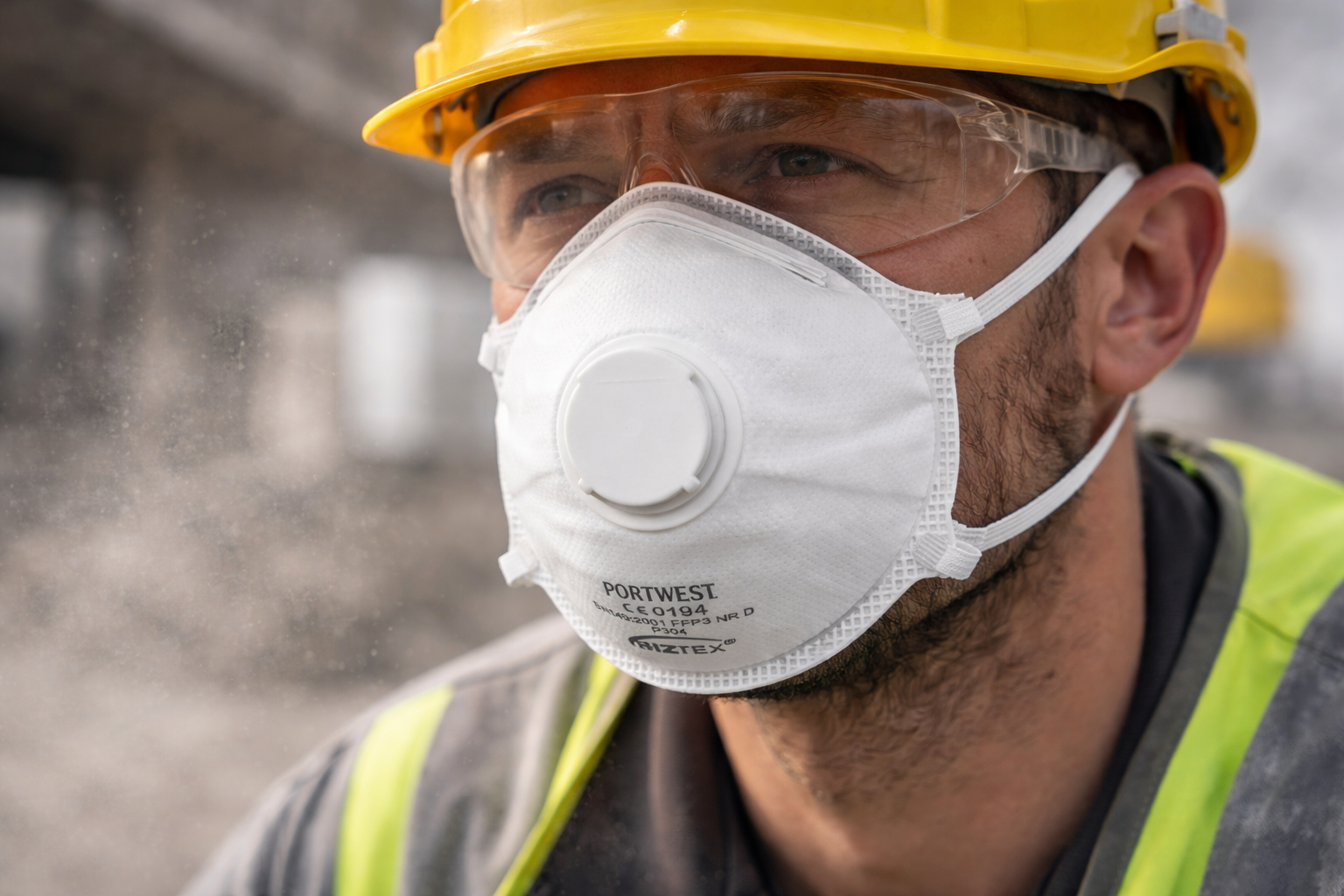
Disposable masks, compliant with EN 149, are intended for single use. An FFP2 filters about 94% of particles, while an FFP3 reaches 99%. On demolition sites, FFP3 is the minimum requirement. However, when working for more than two consecutive hours, the breathing resistance of a disposable mask becomes tiring. Choosing a reusable model with an exhalation valve significantly improves thermal comfort.
Here is a quick comparison of configurations by profession:
-
Carpentry/Construction (wood dust, cement): Disposable FFP3 mask or M6200 half mask with P3 filters.
-
Spray painting (solvents, varnishes): M6400 half mask with A2P3 cartridges.
-
Chemical industry (acid gases): M9300 full-face mask with A2B2E2K2P3 cartridges.
-
Agriculture (spraying, pesticides): M6400 half mask with combined A2P3 filters.
Understanding Delta Plus Filters and Cartridges: Colors and Letters
The standardized Delta Plus color code allows immediate identification in the field for your safety. The letter defines the type of pollutant filtered, while the numerical marking indicates its absorption capacity. The higher the number, the longer the cartridge takes to saturate in a polluted environment, ensuring optimal respiratory protection during intensive maintenance phases.
Identification of protections The A Brown code relates to organic vapors such as solvents. The B Gray code blocks inorganic gases such as chlorine. The E Yellow code protects against acidic gases. The K Green code is for ammonia. Finally, the P White marking ensures dust filtration.
Use and maintenance Mixed cartridges offer total protection but increase weight and cost. To optimize your budget, install pre-filters to protect the main cartridge from dust clogging. A saturated or expired cartridge is life-threatening. For wood, a P3 filter is essential. If you handle only one solvent, a specific protection is sufficient.
Use and Maintenance for Long-Lasting Protection
A poorly fitted Delta Plus respiratory mask is completely useless. This is the harsh reality in the field. Air always follows the path of least resistance: if it can pass between your skin and the mask seal, it will contaminating your lungs.
Fit Test and Adjustment
To check the seal of a Delta Plus half mask, perform a negative pressure test. Place the palms of your hands over the filters and inhale. The mask should slightly collapse onto your face, and no air should enter. If air leaks in, tighten the straps or change size. Note that a three-day beard makes sealing impossible. Hair creates micro-gaps that cancel the pressure needed for filtration. This precise adjustment is your only barrier against invisible particles.
Cleaning and Storage: Best Practices
After each use in a contaminated area, systematically remove the filters from the reusable mask. Clean the mask body (plastic and silicone parts) with lukewarm water and mild soap. Never use solvents to clean the mask, as this could damage the exhalation valves and permanently degrade the facial seal. Once dry, store it in an airtight bag or its original box, away from direct light and heat. Leaving a mask exposed in a workshop unnecessarily saturates activated carbon cartridges through simple contact with ambient air.
When to Replace Components?
There is no fixed date, but there are clear signs. For particle filters (P2/P3), replace them as soon as you feel resistance when inhaling this means the filter media is saturated with dust. For gas cartridges, the criterion is smell. If you start to detect the odor of the handled substance inside the mask, stop work immediately and replace the cartridges. For increased safety, establish a preventive replacement schedule based on your actual usage time and the toxicity of the substances.
Additionally, wearing durable work pants and appropriate equipment reduces cross-contamination between your work area and your changing room. Personal protection is a coherent system that requires daily discipline to ensure long-term health.

FAQ: Your Questions About Delta Plus Masks
Can you wear a Delta Plus mask with prescription glasses?
Delta Plus half masks are designed to be compatible with most safety and prescription glasses. However, if you wear bulky glasses, the nasal seal may be displaced. In that case, opt for the M9200 full-face mask with an internal corrective lens kit.
What is the lifespan of an unsealed filter?
Once removed from its airtight packaging, the activated carbon in a cartridge begins to absorb moisture and airborne pollutants, even when not in use. As a general rule, even without use, an unsealed cartridge should be discarded after 6 months. Always store them in airtight containers.
What is the difference between the M6400 Jupiter and M9300 Strap Galaxy series?
The M6400 is a two-tone silicone half mask, lightweight and compact, ideal for prolonged work without visual obstruction. The M9300 is a full-face mask with a panoramic field of vision, offering S3-level protection (the highest level of performance, here adapted to facial resistance and total sealing).
Are filters from other brands compatible?
Delta Plus generally uses proprietary bayonet connections or EN 148-1 threads. Mixing brands is strongly discouraged. The certification of the entire system (mask + filter) is only valid if you use components from the same manufacturer. This is a major compliance point during labor inspections. The Oxwork catalog offers a wide selection of workwear and Delta Plus PPE to meet every professional need. One final professional tip: do not wait to feel discomfort before wearing your mask. The most serious damage is often the damage you don’t feel immediately.