DE
DE  FR
FR  IT
IT 
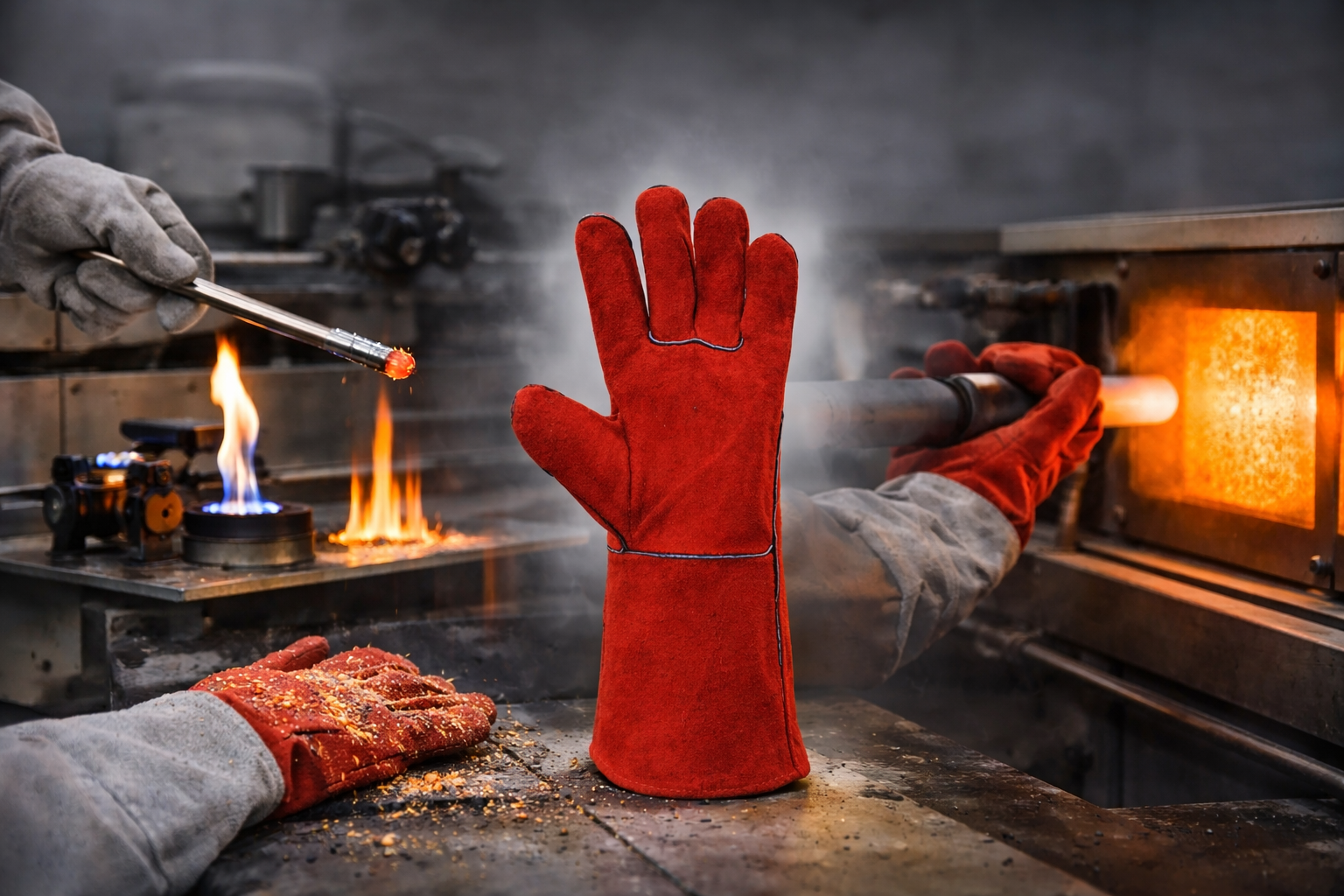
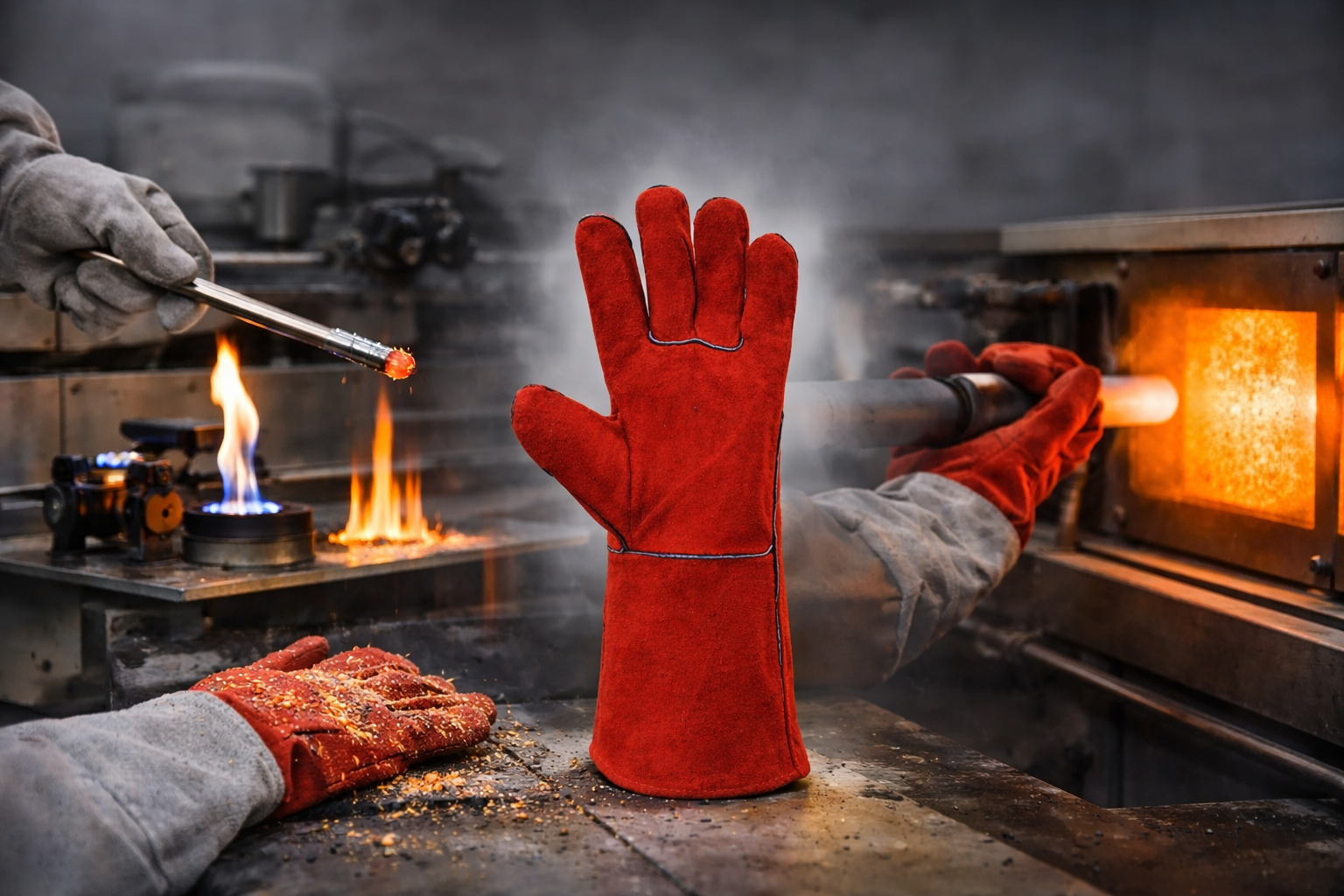
The EN 407:2004 standard defines the requirements for protective gloves against thermal risks.
- Standardized pictogram allowing quick identification of the resistance level to contact heat, flames, and radiant heat
- Mandatory tests measuring flammability, contact heat up to 500°C, and resistance to molten metal splashes
- Informed PPE selection according to your sector (metallurgy, glass industry, welding) to drastically reduce burn accidents
With six performance levels tested in the laboratory. Every year, thousands of workers suffer serious burns that could have been avoided with the right equipment.
Yet many wear gloves supposed to protect them from heat. The issue is simple: not all heat-resistant gloves are equal.
This standard exists precisely to distinguish reliable equipment from those that cannot withstand molten metal splashes or prolonged contact with a hot surface.
For QHSE managers, PPE buyers, or professionals exposed daily to heat such as welders, foundry workers, and glassworkers, understanding this certification becomes essential.
It ensures that your teams benefit from real protection, measured scientifically. This guide details the test criteria, deciphers the pictograms printed on your gloves, and reveals what manufacturers often fail to mention. You will also know how to choose the right performance level for your activity without overpaying for unnecessary features.
Objective: zero avoidable burns within your team
What is the EN 407:2004 standard and why does it exist?
The EN 407:2004 standard sets the performance criteria for gloves against thermal risks. The European Committee for Standardization (CEN) imposes strict tests to protect workers against heat or cold.
Each tested glove displays a pictogram with six digits (from 0 to 4) indicating the protection levels against the different thermal hazards encountered.
A European standard to harmonize thermal protection
Before 2004, each country set its own rules. Professionals found it difficult to compare equipment with one another.
European harmonization changed everything: a glove certified to EN 407:2004 now offers the same guarantees in Paris, Milan, or Berlin. This standardization simplifies B2B purchasing and strengthens the compliance of companies subject to the French Labor Code.
The six thermal risks assessed
The standard covers the full range of workplace thermal risks:
- Flame resistance: burning duration after removal from the source
- Contact heat: insulation when touching hot surfaces
- Convective heat: protection against circulating hot air
- Radiant heat: barrier against intense thermal radiation
- Molten metal splashes: penetration time of incandescent droplets
- Resistance to contact cold: insulation against icy surfaces
How are gloves tested under the EN 407:2004 standard?
Each thermal pictogram on your gloves results from a rigorous laboratory process. The EN 407:2004 certification requires six separate tests, each simulating a specific thermal hazard. These protocols ensure that the displayed results reflect real, measurable, and repeatable performance.
This is not a simple claim: everything is verified.
The six laboratory test protocols
Each letter of the pictogram refers to a specific standardized test.
Test A evaluates fire behavior by exposing the sample to a vertical flame for fifteen seconds. The ignition time, burn duration, and formation of glowing residues are then measured.
Test B checks resistance to contact with a hot surface, between 100°C and 500°C.
By calculating the delay before the internal temperature reaches a critical threshold, Test C simulates convective heat by placing the sample in front of a flame. The time required for a 24°C temperature rise to pass through the material is measured.
For radiant heat, Test D exposes the glove to calibrated infrared radiation with the same temperature differential objective. These last two tests ultimately reveal the insulation capacity against heat sources without direct contact.
- Test E: resistance to splashes of small molten metal droplets (number of droplets withstood without perforation)
- Test F: resistance to contact with large quantities of molten metal (mass required to penetrate the material)
Methodology and standardized conditions
All tests follow a strict protocol defined by ISO. Fixed ambient temperature, controlled humidity, and equipment calibrated according to international standards.
This reproducibility allows objective comparison between different models, regardless of the accredited laboratory performing the tests. At Oxwork, we only select gloves whose results are documented by certified organizations, ensuring the reliability of the performance levels displayed on each product.
Decoding the pictogram and performance levels
On each pair of gloves certified under the EN 407:2004 standard, you will find a thermal pictogram accompanied by a sequence of six digits. This code precisely indicates the performance levels measured in laboratory conditions for each thermal risk.
Understanding how to read it allows you to choose equipment suited to real working conditions, without relying solely on marketing claims. The pictogram represents a stylized flame, symbolizing thermal protection.
Just below, you will see a sequence such as “4 2 4 3 X X”. Each position corresponds to a specific test, in a fixed order that makes it easy to compare products.
The ratings range from 0, indicating minimal performance or no protection, up to 4 for maximum resistance. An “X” means that the test was not performed or that the glove does not claim protection against that specific risk.
Understanding the six-digit sequence
Prioritize levels 3 or 4 in key positions rather than average scores across all criteria.
- Position A: fire behavior (flame spread)
- Position B: contact heat (resistance from 100°C to 500°C)
- Position C: convective heat (exposure to direct flame)
- Position D: radiant heat (proximity to an infrared source)
- Position E: small molten metal splashes
- Position F: large quantities of molten metal
Oxwork tip: Before buying, identify your two main thermal risks. Prioritize level 3 or 4 on those positions rather than an average rating across all criteria.
Practical examples of common ratings
A rating like “4 2 3 2 X X” indicates solid protection against flame (4) and convective heat (3), but lower performance for contact heat (2) and radiant heat (2). No molten metal splash tests were carried out.
This profile is suitable for occasional work near open flames, without handling hot objects.
Conversely, a glove rated “3 4 2 1 X X” is excellent for handling high-temperature parts while still offering adequate protection against ignition. However, it remains vulnerable to molten metal splashes.
What PPE sellers don’t tell you about the standard
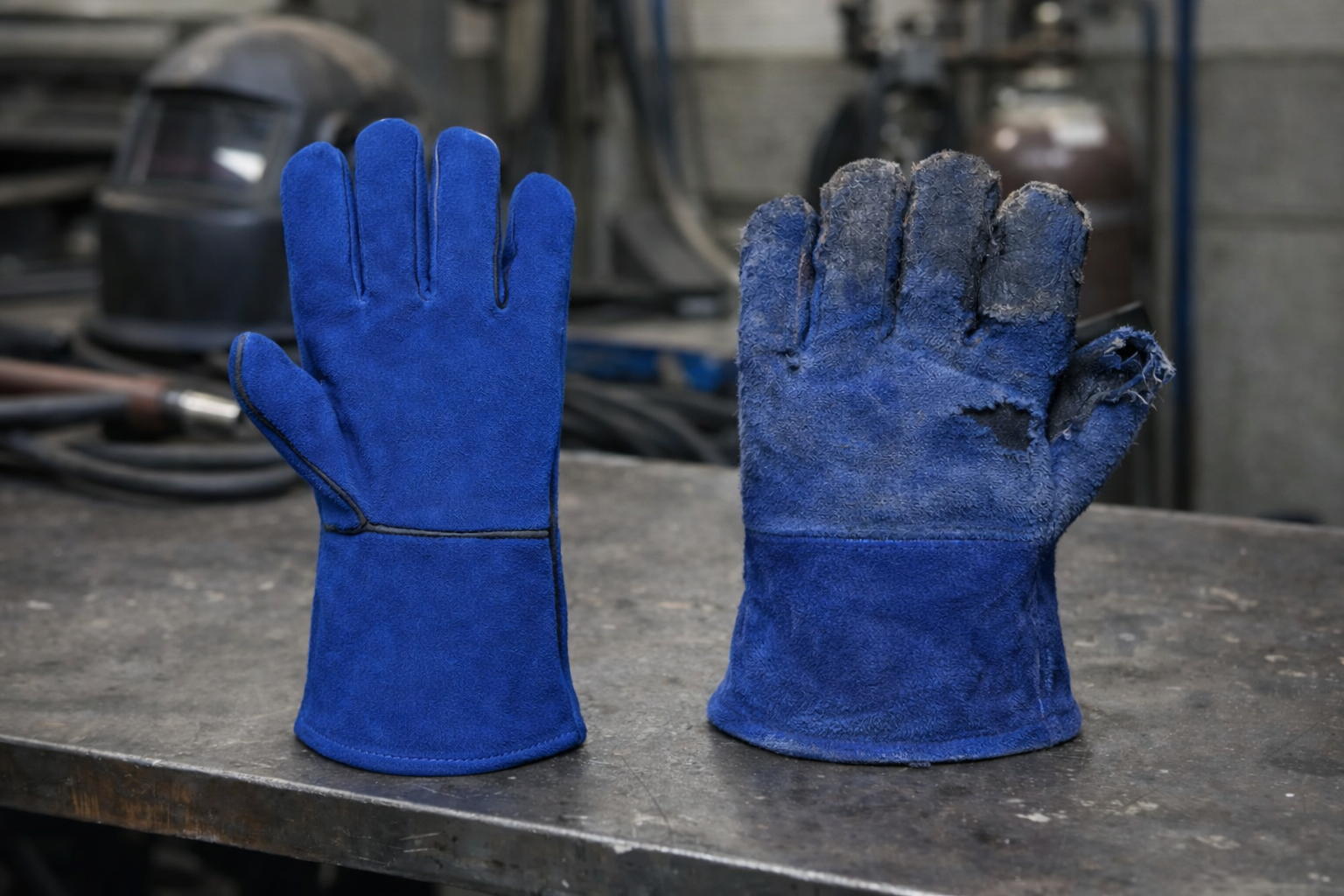
Manufacturers love to highlight their certifications. But what they often fail to mention is this: EN 407:2004 tests are performed on brand-new gloves, under perfect laboratory conditions.
In real working environments, after just a few weeks of intensive use, that level of protection can drop by 40 to 60%. Wear and tear, micro-tears, and industrial residues all degrade thermal performance long before the glove shows visible damage.
Bottom line: a level 4 rating achieved in the lab does not guarantee equivalent protection after three months of daily use.
The limitations the standard cannot address
One often overlooked aspect: resistance to contact heat only covers a fraction of real risk. This value measures how long you can touch a hot surface before getting burned. But it does not account for continuous exposure to ambient heat, splashes of boiling liquid, or sparks.
That’s why certain PPE combine multiple standards: EN 388 for mechanical resistance and EN 407 for thermal protection. The challenge is that this combination creates a trade-off: when you increase thermal protection, you inevitably lose dexterity.
Choosing the right gloves for your industry
Each work environment comes with its own thermal constraints. A glove that performs well in a foundry may be completely unsuitable for industrial baking.
The EN 407:2004 standard defines six distinct tests, but you need to identify which ones truly matter for your activity. Let’s take a concrete example to illustrate this.
In metallurgy, molten metal splashes represent the main risk to manage. You need gloves with high performance in tests E and F.
These tests cover both small droplets and large splashes of molten material. Test A (flame resistance) also matters, but comes second.
On the other hand, a baker handles trays at 250°C without dangerous splashes. In this case, only test B (contact heat) becomes critical. Ignoring these nuances can lead to costly workplace accidents.
Recommendations by industrial sector
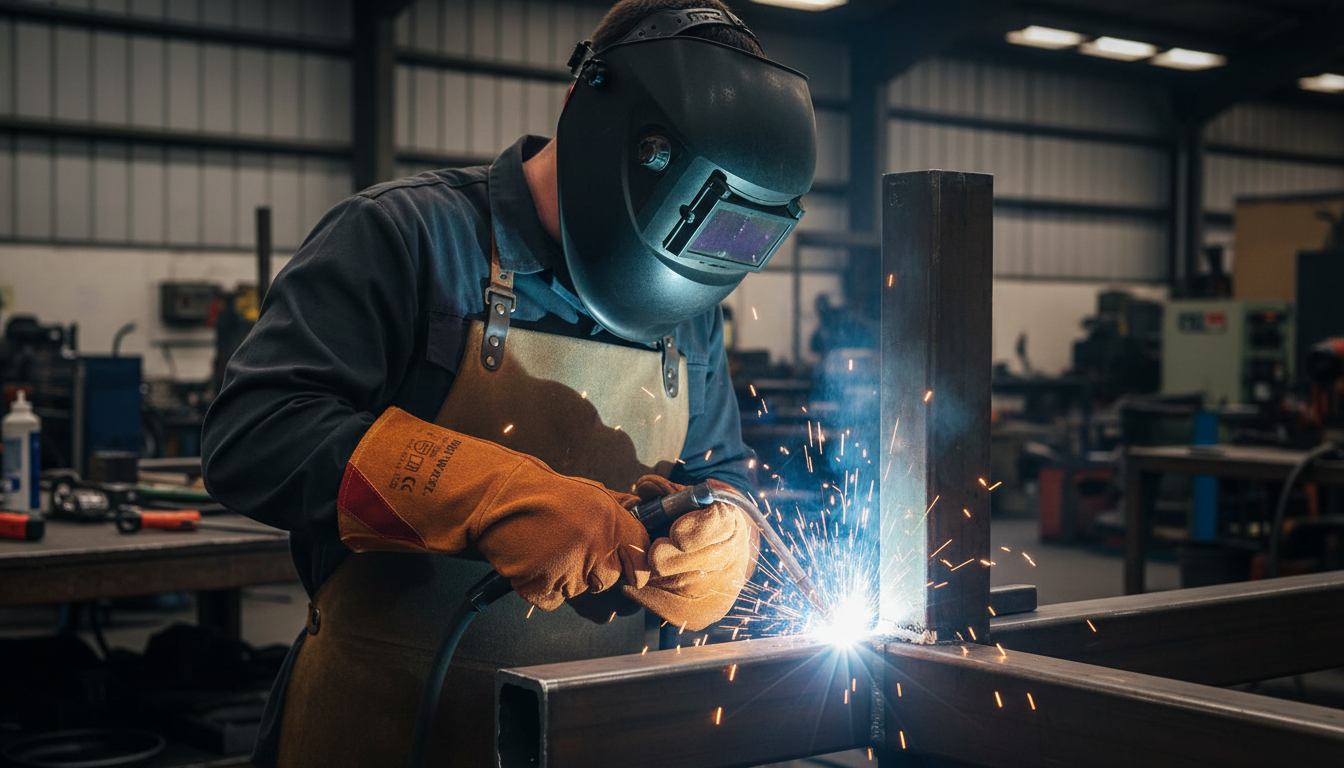
Each profession has its own specific risk profile. Welders are mainly exposed to radiant heat (test D) and splashes of fine particles.
In the glass industry, both contact heat and radiant heat occur simultaneously. This requires balanced performance across tests B and C.
Maintenance teams need versatility, as they cannot predict the type of heat source they will encounter. Firefighters, on the other hand, go far beyond the standard requirements defined by the norm.
Table of recommended minimum levels
| Sector | Priority tests | Minimum levels | Pitfall to avoid |
|---|---|---|---|
| Foundry | E, F, A | E3, F3, A1 | Neglecting test A |
| Welding | D, E, A | D2, E2, A1 | Underestimating radiant heat |
| Glass industry | B, C, A | B2, C3, A1 | Ignoring B/C balance |
| Baking | B, A | B2, A1 | Over-equipping unnecessarily |
| Maintenance | All | Balanced performance | Focusing on a single test |
These recommendations provide a starting point. Your risk assessment remains essential to adapt these thresholds to your specific situation.
Frequently asked questions about the EN 407:2004 standard
Professional buyers often ask the same questions. That’s normal when managing significant PPE budgets.
Here are clear answers to the six questions that consistently come up in our discussions with safety managers.
Certification and regulatory compliance
EN 407:2004 certification remains valid without a fixed time limit. The marking is valid as long as the product retains its original properties.
However, gloves degrade with daily use, frequent washing, and contact with chemicals. You should replace your PPE as soon as a tear appears, the fabric thins, or it loses flexibility.
In intensive industrial environments, plan for replacement every three to six months. For occasional use, one year is generally sufficient.
French regulations require certified gloves for any exposure to extreme temperatures in professional settings. There is zero tolerance during labor inspections on this point.
EN 407:2004 works perfectly alongside EN 388 for mechanical risks and EN 374 for chemical protection. Many gloves display multiple pictograms at the same time.
The 2020 version of the standard mainly introduces higher performance levels and more precise testing methods. Products certified under the 2004 version remain compliant but offer lower maximum performance levels.
Oxwork tip: verify authenticity by requesting the full certificate from the notified laboratory. A simple marking is not enough during a thorough QHSE audit.
Protect your teams with the right thermal protection
You now know how to decode the EN 407:2004 pictogram and choose gloves suited to the risks of your activity. The six performance levels ensure that your teams work safely when exposed to heat and flames.
Start by assessing the actual temperatures at your workstations. Identify whether your teams handle hot parts, work near radiant heat sources, or face splash risks.
To choose certified gloves that truly match your constraints, the Oxwork team analyzes your needs and guides you toward the right PPE.
You benefit from personalized support, from product selection to team training. Your employees deserve reliable and effective thermal protection.