DE
DE  FR
FR  IT
IT 
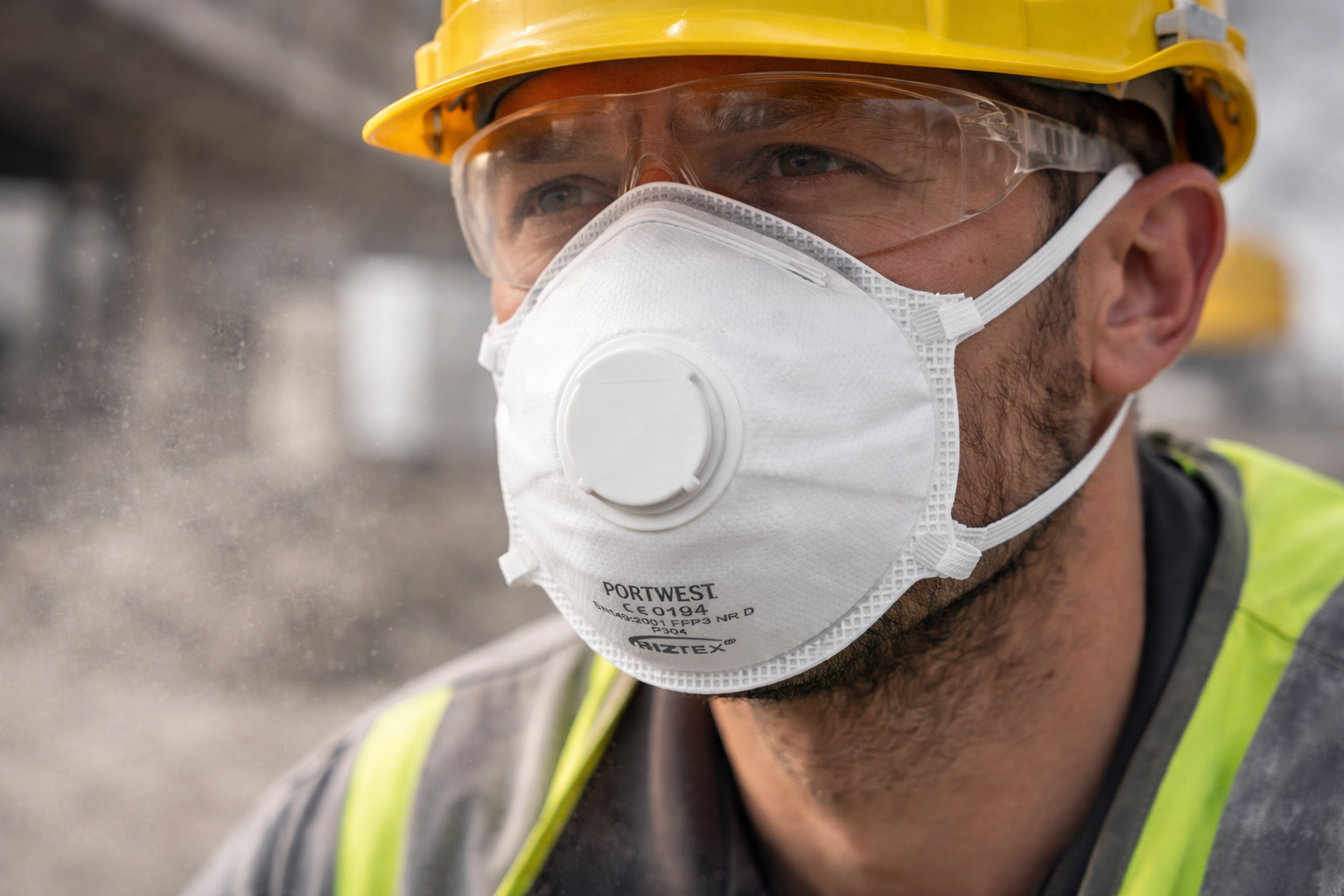
Masks FFP2 filter 94% of particles versus 99% for FFP3, a critical difference in toxic or infectious environments.
- FFP2 is suitable for non-toxic dust and common viruses, while FFP3 is designed for dangerous aerosols and severe pathogens
- Check for the CE marking and EN 149 standard before any professional purchase
- An unsuitable choice can expose your teams to CARSAT penalties that may reach several thousand euros
Your site manager is coughing after three hours of sanding. Normal?
Not really.
The ffp2 vs ffp3 debate goes far beyond a simple technical comparison between two respiratory masks. For QHSE managers and PPE buyers, this decision directly affects employee health and the company’s compliance with labor code obligations.
Choosing an FFP2 when an FFP3 is required can turn an audit into a legal nightmare.
Contrary to common misconceptions, these two protection levels are never used in the same professional contexts. FFP2 protects against non-toxic solid and liquid particles, while FFP3 becomes mandatory when handling carcinogenic substances or group 3 biological agents.
In this guide: regulated filtration thresholds, the sectors concerned by each mask, the pitfalls of questionable certifications, and a guide to selecting the right equipment according to your real risks. You will know exactly which mask to order for each risk-related workstation in your company.
What is the FFP classification and why it changes everything
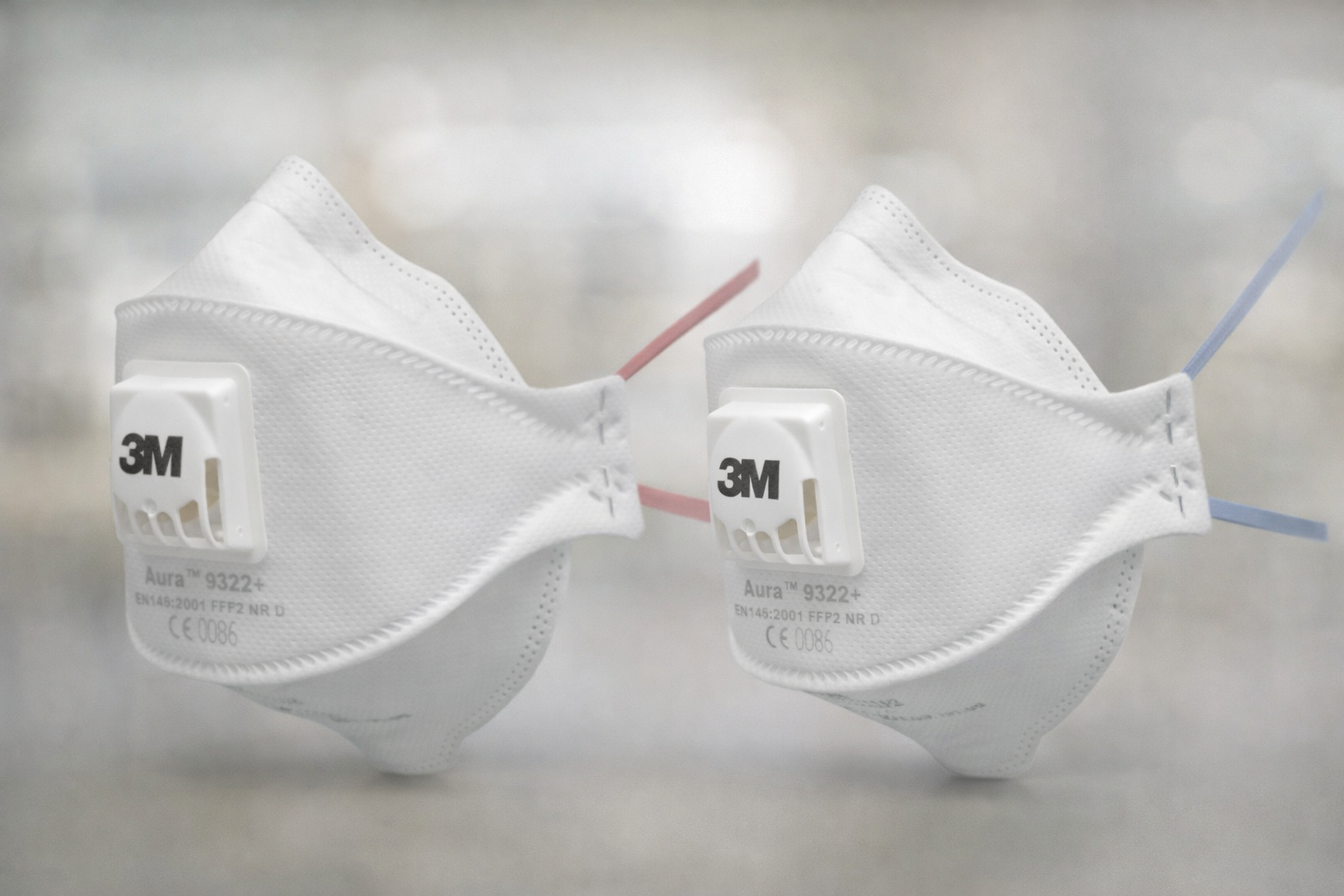
The European standard EN 149 fully regulates respiratory protection at work. It establishes three categories of filtering masks according to their performance against particles: FFP1, FFP2 and FFP3.
Each level corresponds to clearly defined professional contexts, with clear exposure limits. There is no room for improvisation here.
European framework for filtering masks
The FFP system is based on two measurable and precise criteria. The first concerns the minimum filtration rate for particles measuring 0.6 microns.
The second assesses total inward leakage, which defines the amount of unfiltered air that reaches the respiratory tract. FFP2 masks filter at least 94% of aerosols with a maximum leakage of 8%.
FFP3 masks, meanwhile, reach 99% filtration with only 2% leakage. This technical difference directly determines their regulatory use in the field.
Oxwork: your partner for compliant respiratory PPE
We offer only CE-certified respiratory masks compliant with the EN 149 standard. Our range is suitable for all demanding professional environments, from construction to high-risk industrial sectors.
Each product complies with your company’s QHSE requirements and guarantees full certification traceability.
FFP2 masks: intermediate protection for moderate risks
The FFP2 mask offers a good balance in professional respiratory protection. Less restrictive than an FFP3, but far more effective than an FFP1.
For many work environments, it is the right approach.
What 94% really means
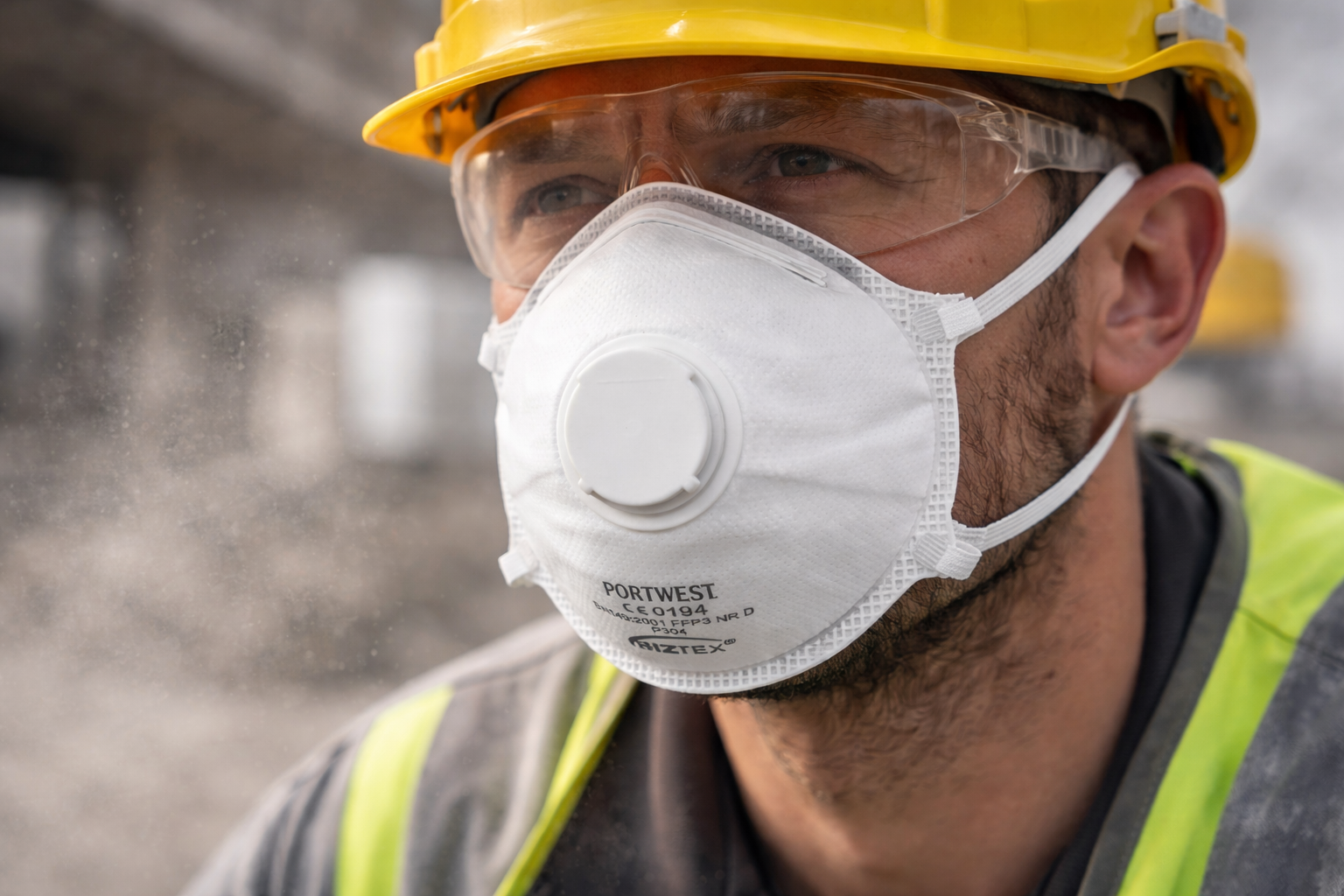
The FFP2 standard guarantees a minimum filtration rate of 94% for particles of around 0.6 microns, with total inward leakage limited to a maximum of 8%. Out of 100 airborne particles, 94 are blocked by the filter.
The remaining 6% either pass through fit leaks or are captured elsewhere. This level is perfectly suited to wood dust, non-toxic water-based mists, or light aerosols from certain industrial products.
In the ffp2 vs ffp3 debate, FFP2 ultimately offers a good balance between protection and breathability.
Professional situations where FFP2 is more than sufficient
At Oxwork, we recommend FFP2 for these sectors.
- Construction and building trades: sanding, cutting non-toxic materials
- Carpentry and cabinetmaking: woodworking without aggressive chemicals
- General industrial maintenance: cleaning, routine maintenance
- Food industry: moderately dusty environments
Our FFP2 range includes valve models to reduce fogging, foldable versions that are easy to carry, and disposable or semi-reusable options depending on your working conditions. Prices range from 15 to 45 euros for professional packs.
FFP3 masks: maximum protection for toxic environments
FFP3 masks provide the highest level of respiratory protection for professionals. With a minimum filtration rate of 99% for 0.6-micron aerosols and total leakage limited to 2%, they offer the best barrier against dangerous particles.
This technical performance justifies their use in environments where even minimal exposure can have serious health consequences. Contrary to common misconceptions, the choice between ffp2 vs ffp3 is not about comfort, but about strict regulatory compliance.
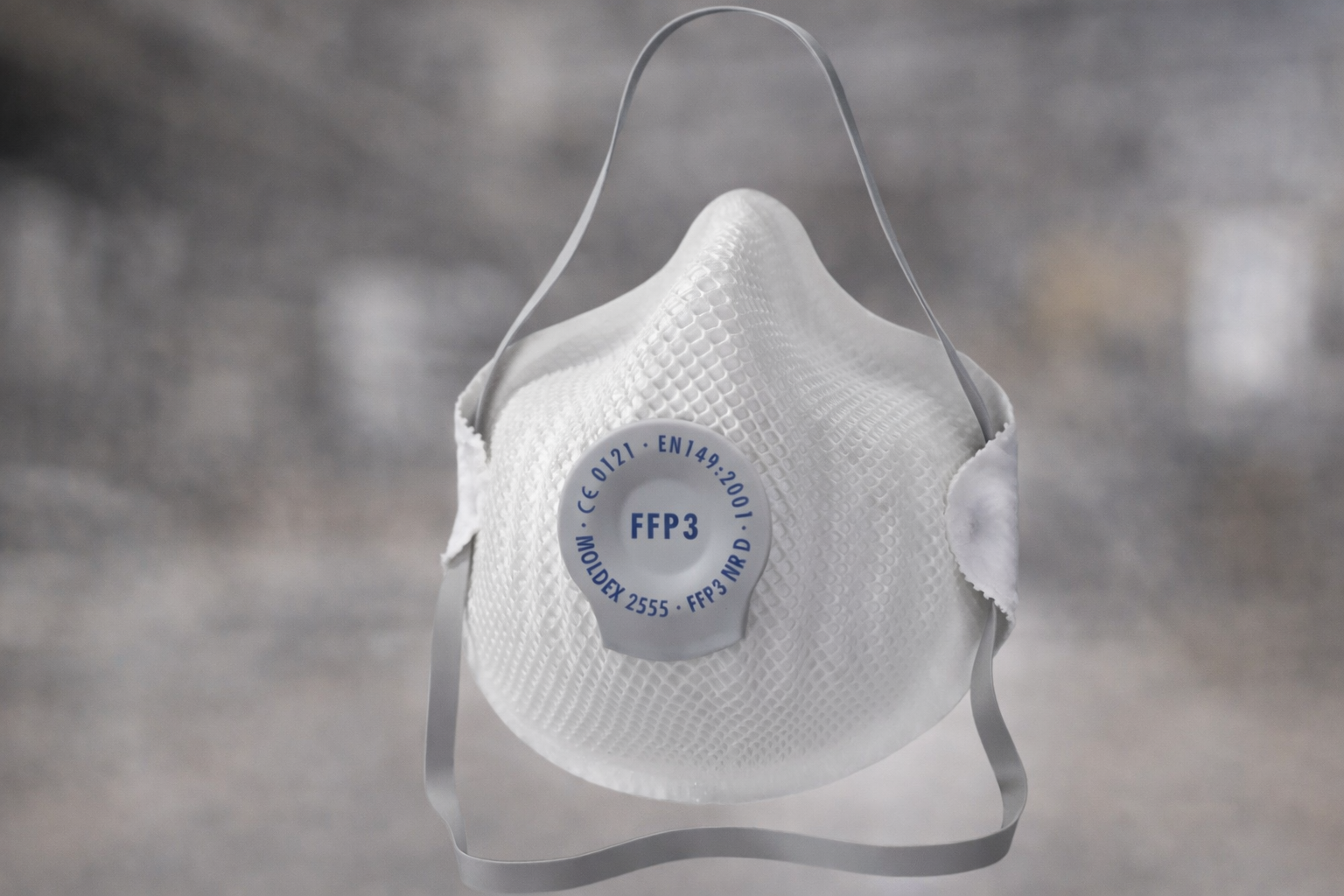
99% filtration, the ultimate barrier against dangerous particles
FFP3 becomes essential in areas where toxic particles pose a direct danger to the respiratory tract. This equipment provides effective protection against carcinogenic substances, radioactive particles, viruses, pathogenic bacteria, asbestos, and airborne heavy metals.
Its high breathing resistance reduces the possible duration of continuous use. To offset this drawback, Oxwork offers FFP3 models with exhalation valves that significantly improve comfort during long interventions.
Regulations and obligations for using FFP3 in the workplace
The French Labour Code requires FFP3 in several high-risk sectors. Four areas require this reinforced protection.
- Asbestos removal and sites containing asbestos
- Chemical industry handling carcinogenic compounds
- Medical sector facing certain class 3 biological agents
- Work in nuclear or radioactive environments
Oxwork advice: carefully check compliance with CE EN 149:2001+A1:2009 and choose valve models if the mask is worn for more than two consecutive hours.
The 7 critical differences between FFP2 and FFP3 that every buyer should know
Choosing between FFP2 and FFP3 is not just a matter of price. Our field teams regularly observe equipment mistakes that unnecessarily expose workers.
The difference between 94% and 99% filtration may seem small on paper, but it becomes critical when dealing with carcinogenic or toxic particles. According to European PPE standards, the total inward leakage rate shows an even greater gap: 8% for FFP2 versus only 2% for FFP3.
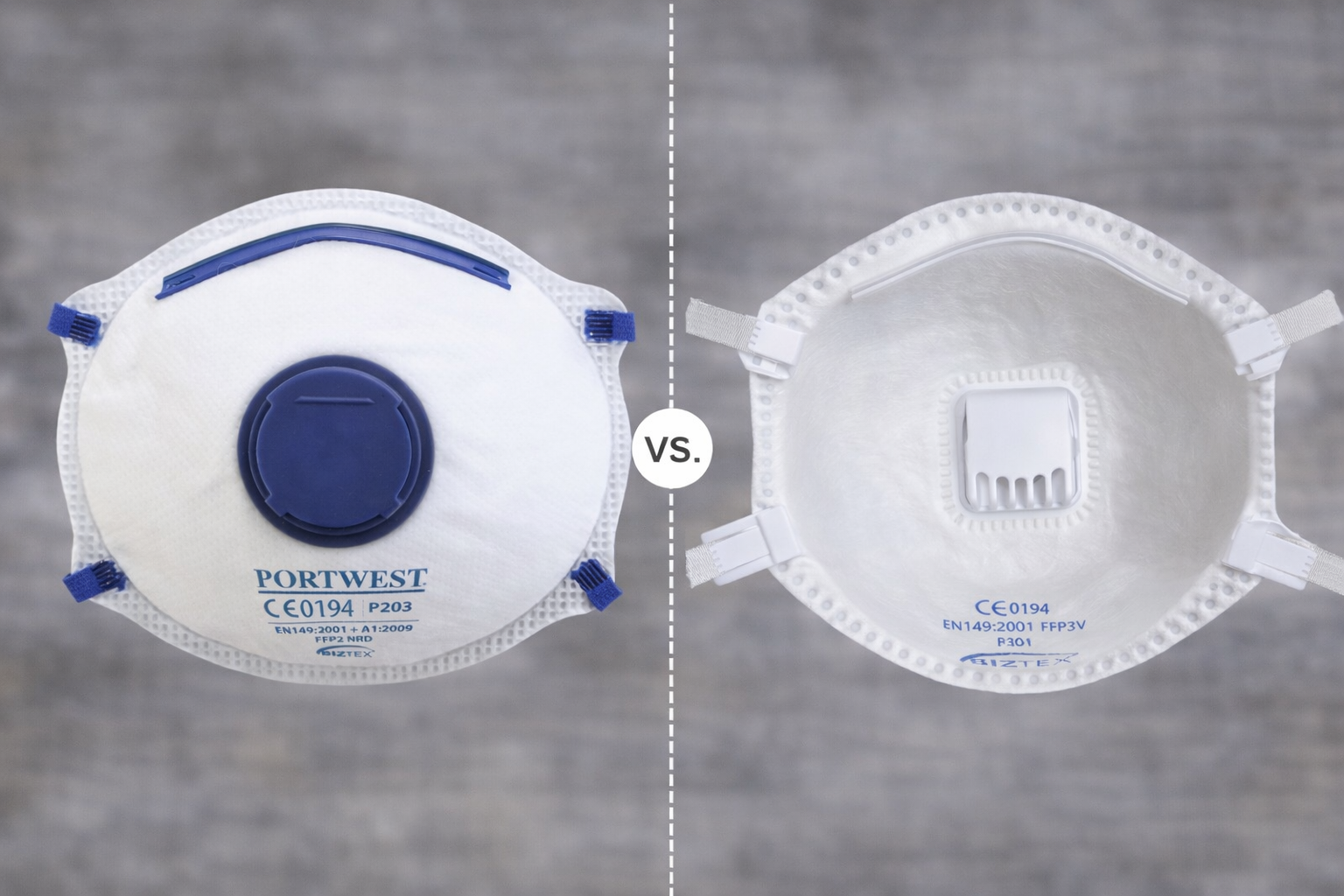
Detailed comparison table: FFP2 vs FFP3 across 7 essential criteria
| Criterion | FFP2 | FFP3 |
|---|---|---|
| Minimum filtration | 94% of particles | 99% of particles |
| Total inward leakage | Maximum 8% | Maximum 2% |
| Types of particles | Dust, viruses, bacteria | Toxic, carcinogenic, radioactive |
| Breathing resistance | Moderate, acceptable for extended wear | High, increased breathing fatigue |
| Recommended wearing time | Up to 8 hours depending on the activity | 4 to 6 hours maximum recommended |
| Application sectors | Standard construction, healthcare, light industry | Asbestos, welding, chemicals |
| Price difference | Baseline reference | 30 to 50% higher |
Prévention BTP recommendations are clear: FFP2 is suitable for standard respiratory risks such as sanding, cutting, or handling inert materials. On the other hand, FFP3 becomes mandatory as soon as there is exposure to toxic or carcinogenic substances. This distinction is non-negotiable from a regulatory standpoint.
The impact of your choice on PPE budget and regulatory compliance
The extra cost of FFP3 is explained by more sophisticated multilayer filtration and much stricter certifications. For a QHSE manager, the decision cannot be based on purchase price alone.
Replacement frequency must also be considered: an FFP3 requires more frequent replacement because its higher breathing resistance causes the filter to saturate more quickly. Our experience shows that many companies overlook this factor when assessing total cost of ownership.
What PPE suppliers do not tell you about FFP masks
Are you buying FFP3 for everyone on your teams? That is an expensive mistake.
Many distributors push over-certification because their margins are better on these products. The result: you pay between 40% and 60% more without any real gain in protection in most environments.
A worker exposed to inert dust objectively does not need a medical-grade FFP3, yet that is often what gets sold. Another point that is rarely discussed: fit matters more than the protection class itself.
A poorly worn FFP3 lets air in from the sides and offers less protection than a properly fitted FFP2. Personal protective equipment requires regular fit testing, something that standard market suppliers rarely provide.
At Oxwork, we focus on objective advice: which FFP class truly matches your documented needs, and how to train your teams to wear these masks effectively.
The truth about over-certification and wasted PPE budget
The price difference between FFP2 and FFP3 is often unjustified in practice. Check the actual lifespan of your masks, because humidity, deformed straps, and poor storage reduce their protection long before the stated date.
Beware of online counterfeits that do not display a valid CE marking.
Why mask fit matters more than its FFP classification
A mask that gaps at the cheeks filters nothing. Prioritize on-site training and seal tests to guarantee real protection, whatever standard you choose.
Which mask to choose based on your sector and professional risks
Choosing between FFP2 and FFP3 depends on your Single Occupational Risk Assessment Document. You must maintain a strict match between the filtration class and the inhaled pollutants.
Your safety data sheet specifies the exact toxicity of the substances being handled. Non-toxic inert dust such as concrete, plaster, or cement requires an FFP2.
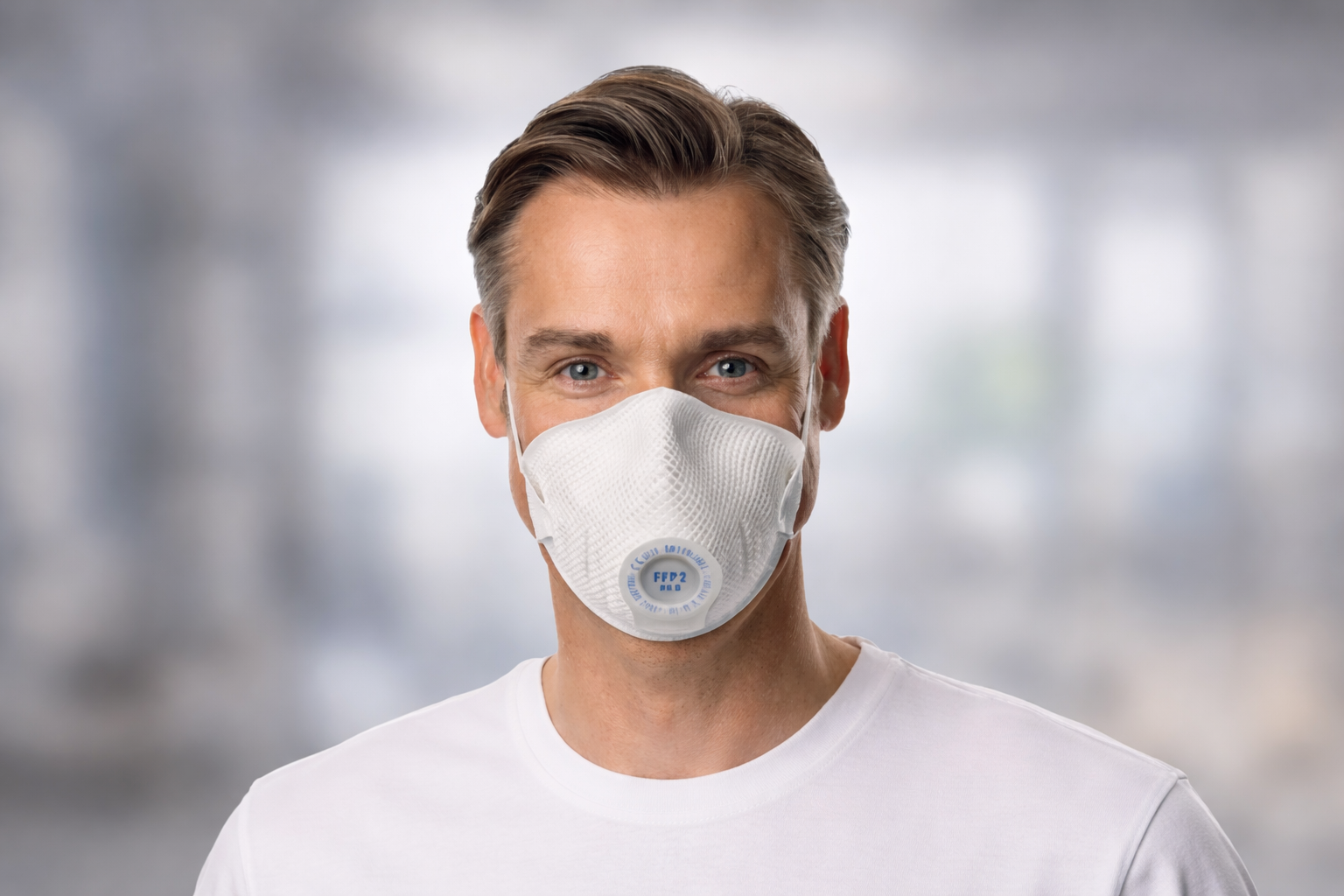
By contrast, any exposure to carcinogenic or toxic substances requires an FFP3. This includes asbestos, crystalline silica, and exotic wood dust.
The same applies to welding fumes containing heavy metals or industrial lead-based paints. INRS states that this distinction is a legal obligation, not just a recommendation.
Which mask for which occupational risk: decision matrix
| Professional sector | Type of risk | Required FFP class |
|---|---|---|
| General masonry | Inert dust, cement, concrete | FFP2 |
| Asbestos removal | Carcinogenic fibers | FFP3 mandatory |
| Carpentry / sanding | Wood dust, excluding exotic woods | FFP2 |
| Metal welding | Toxic fumes, chromium, nickel | FFP3 |
| Industrial painting | Solvent and pigment aerosols | FFP3 |
Oxwork advice: always check section 8 of your SDS for exposure control measures. It indicates the minimum required FFP class.
Our teams help you find the model that truly matches your activity.
High-risk sectors that absolutely require an FFP3
Some jobs completely rule out FFP2 for safety reasons. Asbestos removal requires an FFP3 with a daily fit check. Stainless steel welding fumes contain hexavalent chromium, classified as CMR: carcinogenic, mutagenic, and reprotoxic.
The same principle applies to exotic wood dust in high-end cabinetmaking. Lead-paint aerosols in old building renovation and sanding of aerospace composite materials also fall into this category.
Prices and where to buy your FFP2 and FFP3 masks with confidence
From a budget standpoint, FFP2 masks range from €0.50 to €3 per unit, while FFP3 masks range from €2 to €8. These price differences depend on several factors: whether an exhalation valve is included or not, more expensive but more comfortable.
Packaging type also matters, box of 50 versus single-unit purchase, and above all certification. A CE-marked mask with full traceability costs more than a model with no indication, but it ensures your regulatory compliance.
FFP2 vs FFP3 pricing grid for professional buyers
| Type | Unit price, low volume | Discounted price, 50+ units |
|---|---|---|
| FFP2 without valve | €1.50 to €2 | €0.50 to €0.80 |
| FFP2 with valve | €2 to €3 | €1 to €1.50 |
| FFP3 without valve | €4 to €6 | €2 to €3 |
| FFP3 with valve | €6 to €8 | €3.50 to €5 |
Why choose Oxwork for your respiratory mask orders
Oxwork offers volume-based pricing for QHSE managers and B2B buyers, with tailored quotes for large orders. Each mask comes with verifiable EN 149 compliance and traceable CE marking.
Be careful with marketplaces where counterfeit products sold at knockdown prices are common: an FFP3 at €0.80 usually hides a scam. Choose a supplier specialized in PPE that ensures fast delivery and complete regulatory documentation.
Frequently asked questions about FFP2 and FFP3 masks
How long should you wear your FFP mask before changing it? The duration recommended by manufacturers varies between 4 and 8 hours of continuous use, depending on the environment.
In practice, our teams observe that beyond 6 hours, filtration efficiency drops noticeably. Disposable masks should never be reused after exposure to hazardous contaminants.
Lifespan and reuse of FFP masks
Can a disposable FFP mask be washed? No.
Unlike surgical masks, which protect others, FFP masks protect the wearer thanks to their multilayer filtering structure. Washing or disinfecting a mask irreversibly compromises this barrier.
Store your masks in a dry place, at room temperature, away from moisture and direct light.
What to check for compliance and certification
You must check for the CE marking followed by EN 149 on the packaging and on each mask. This label confirms that FFP2 filters at least 94% of aerosols, while FFP3 filters at least 99%.
Beware of counterfeits and ask the supplier for the certificate of conformity. FFP3 remains mandatory only for certain high-risk jobs such as asbestos work or industrial painting. In most cases, FFP2 is sufficient.
Protect your teams with the right FFP mask today
Choosing between FFP2 and FFP3 comes down to two criteria: filtration level and level of risk. FFP2 filters 94% of particles with a maximum leakage of 8%, making it ideal for dust, non-toxic mists, and moderate-risk environments.
FFP3 reaches 99% filtration and limits leakage to 2%, making it essential against carcinogenic agents, viruses, and highly toxic substances. Your decision must be based on a rigorous occupational risk assessment and compliance with current standards.
Order your certified FFP masks from Oxwork now
Oxwork brings together everything demanding B2B buyers expect: a full EN 149-certified range, competitive prices, personalized advice, and fast delivery. Our team helps you choose the right solution for your field constraints.
Browse our FFP2 and FFP3 mask catalog now, request your free quote, or contact us for tailored support. Protecting your teams starts with the right equipment.
Choosing the right mask based on your real risks
FFP2 vs FFP3: two levels of protection designed for different exposure types. FFP2 filters 94% of particles and is suitable for moderate-risk environments, while FFP3 reaches 99% and is required when dealing with toxic or carcinogenic substances.
Does your occupational risk assessment identify fine dust, viruses, or hazardous chemical agents? This evaluation tells you exactly which FFP level is required to protect your teams.
Before ordering, always check for CE EN 149 certification on the packaging. A non-compliant mask puts your employees at risk and exposes you to penalties.
Oxwork supports demanding professionals with a wide catalog of certified FFP2 and FFP3 masks, competitive B2B pricing, and fast delivery throughout France. Our PPE experts analyze your needs and guide you toward the solution best suited to your on-site constraints.
Browse our full range on the Oxwork website or request your free quote for bulk orders.
Protecting your teams starts with an informed choice.