DE
DE  FR
FR  IT
IT 
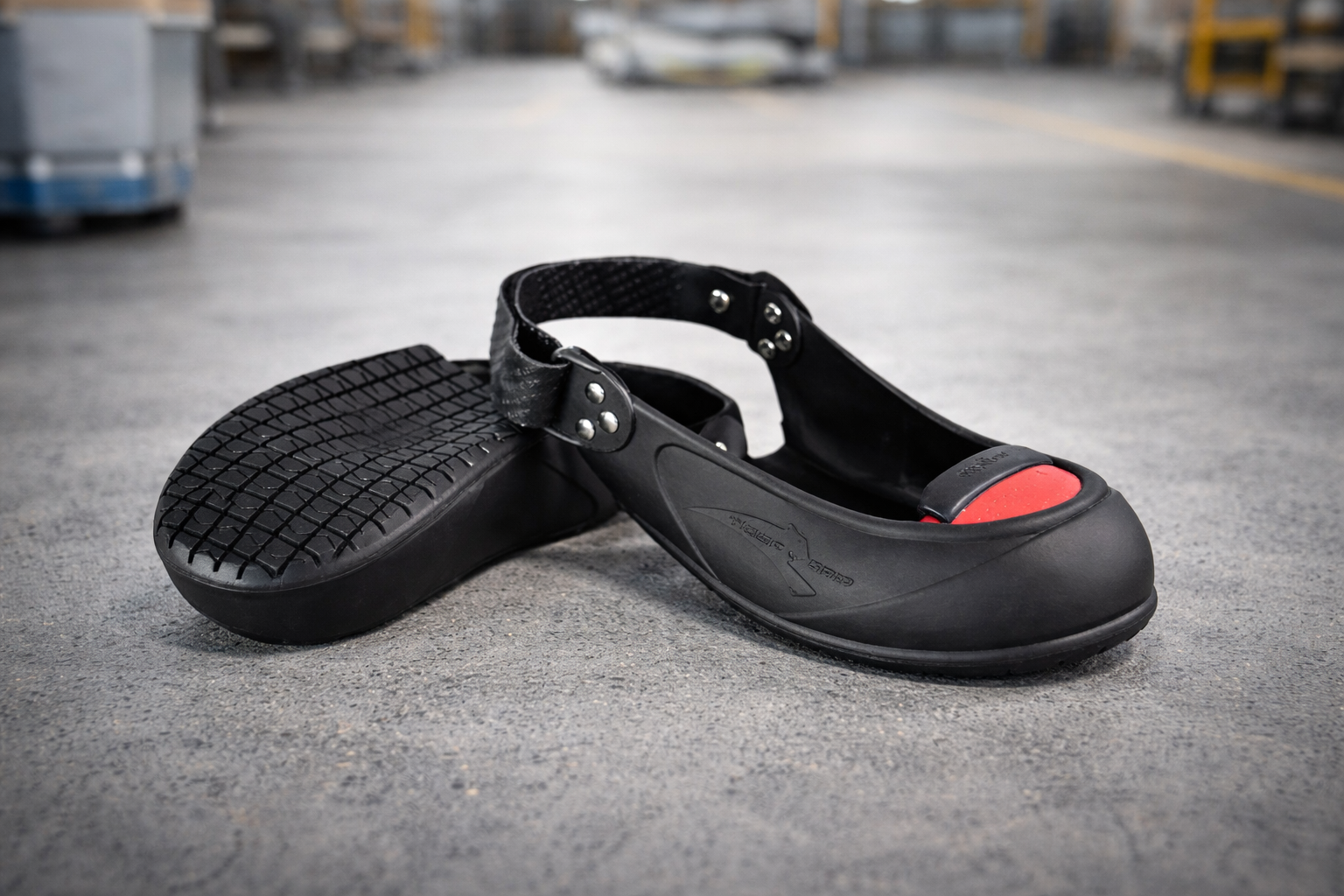
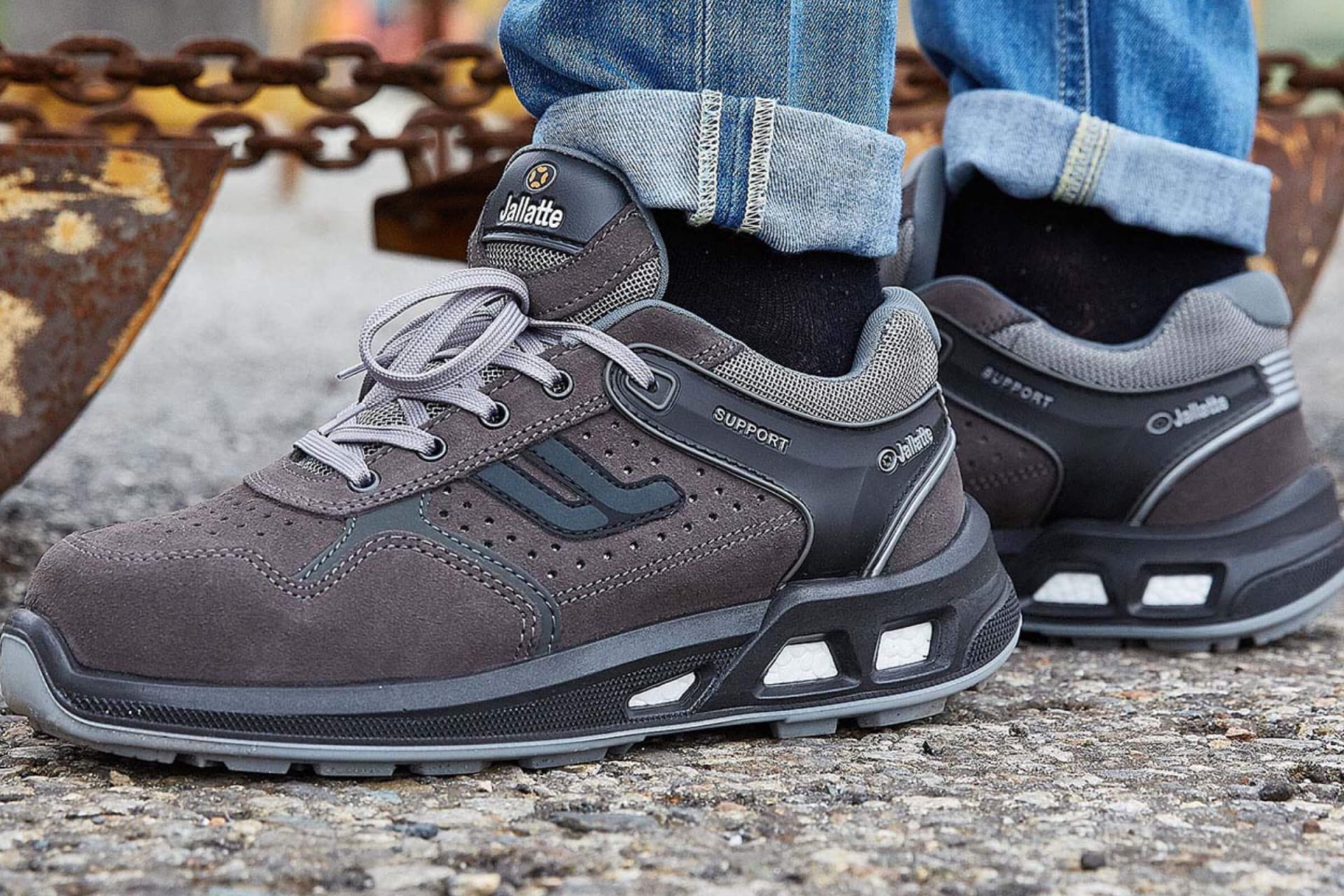
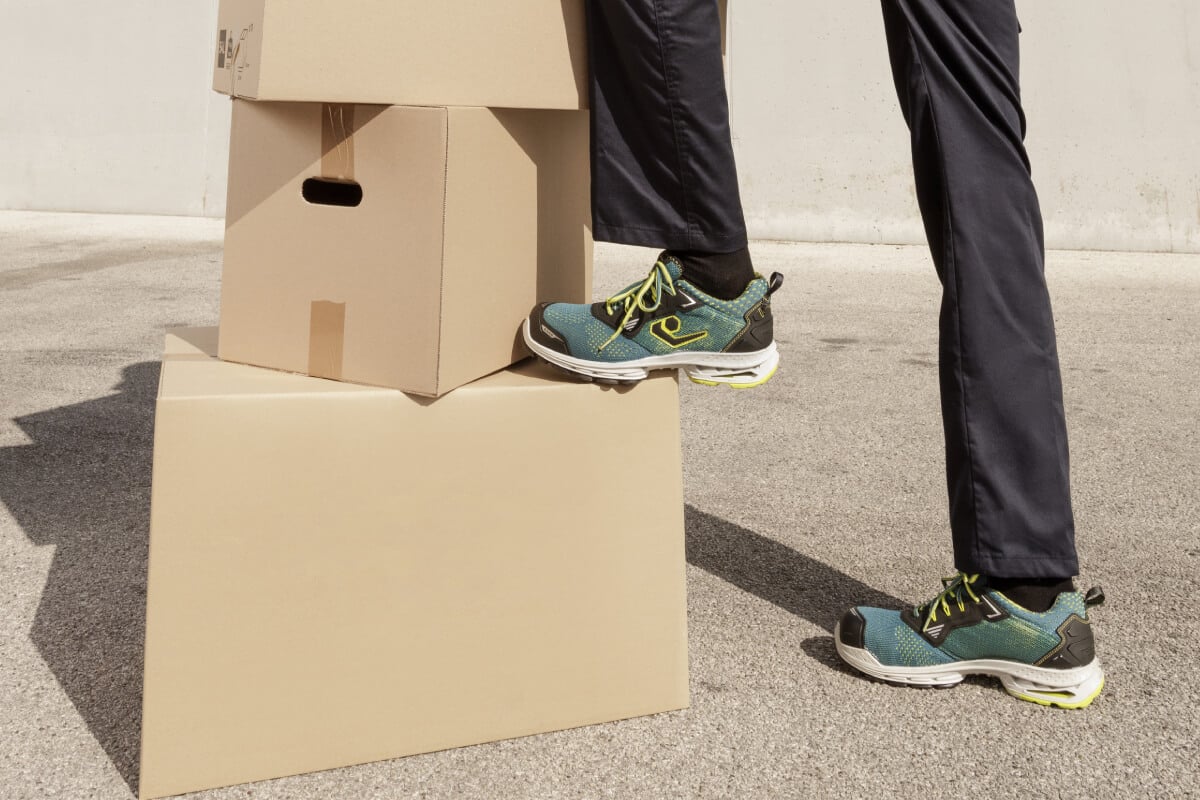
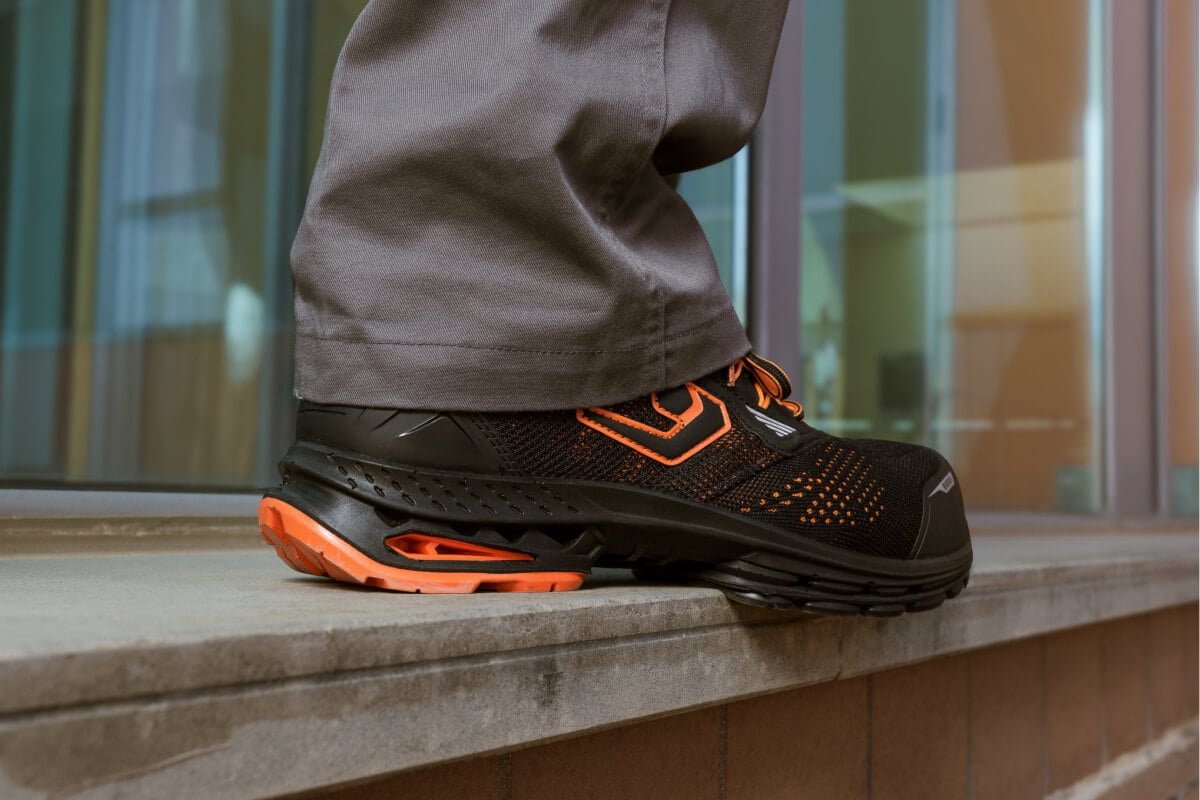
Safety overshoes protect your feet against crushing, punctures, and slipping, complying with EN ISO 20345 standards required on construction sites.
- Guaranteed regulatory compliance according to Labour Code requirements
- Reinforced protection in addition to your existing footwear
- Significant reduction in accidents related to falls and foot injuries
Every year, foot injuries account for a significant share of work stoppages in the construction sector and industry. Yet many companies still neglect this vulnerable part of the body. Safety overshoes provide an additional solution for professionals exposed to high-risk environments: construction sites, workshops, and industrial areas.
They adapt quickly to your existing equipment while strengthening protection against impacts, sharp objects, and slippery surfaces. This approach is also often more cost-effective than multiplying pairs of shoes. QHSE managers, B2B buyers, demanding tradespeople: here you will find models suited to each sector and the key selection criteria needed to comply with regulations.
Field feedback shows their real effectiveness in day-to-day use. It also highlights the frequent mistakes made during purchase and the technical points to check before getting equipped. The objective remains simple: to help you choose your equipment with full knowledge of the facts.
Objective: to help you choose your equipment with full knowledge of the facts, without approximation.
Why safety overshoes are becoming essential
The statistics are clear. Foot injuries represent a growing share of work stoppages on French construction sites. Frankly, the social cost remains considerable for the whole sector.
Protective equipment such as safety overshoes has now become an operational and legal necessity, far beyond simple comfort. Employers invest in these devices to protect their teams and their liability.
The figures that raise concern
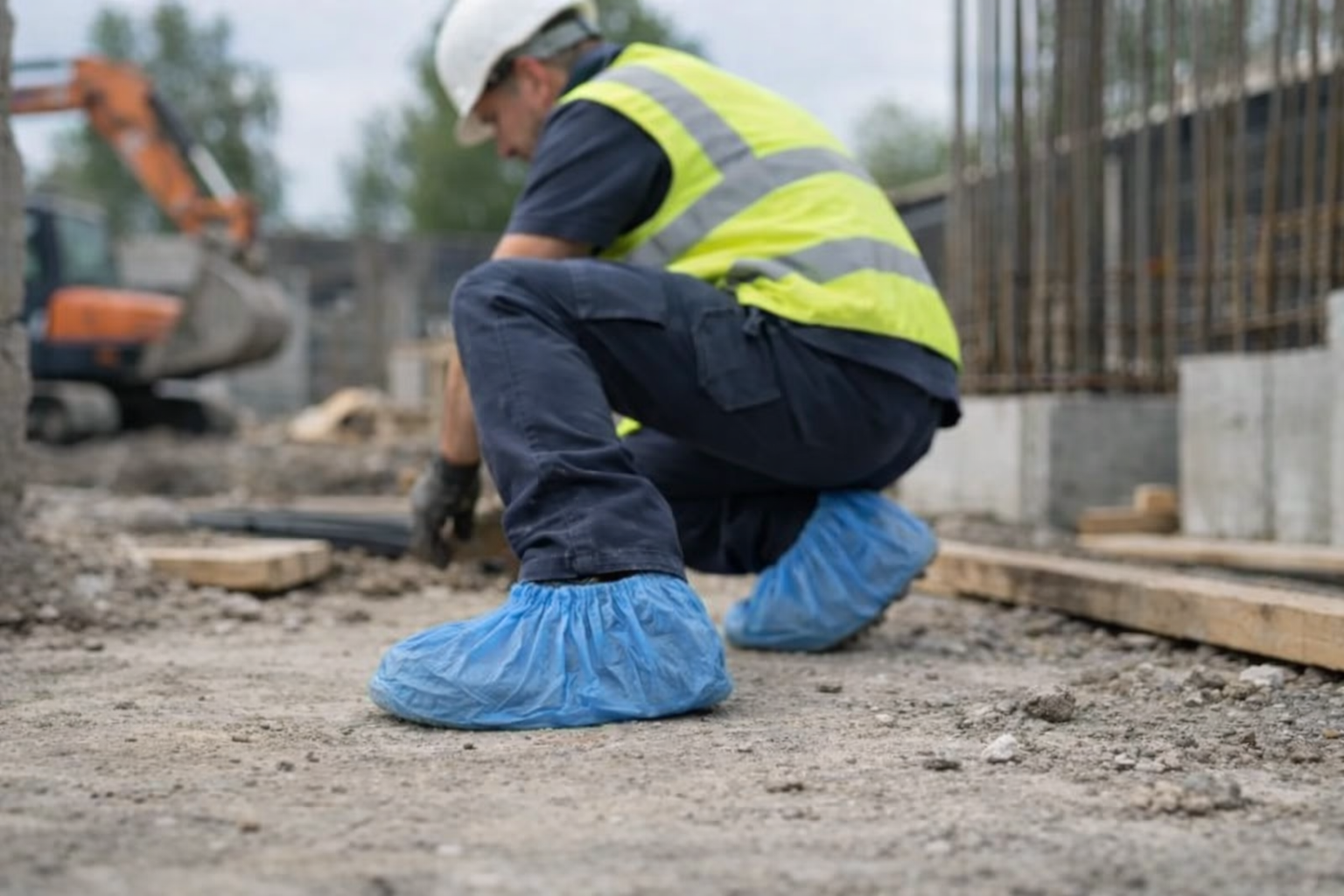
According to the INRS, more than 70% of foot-related accidents in the construction sector are caused by falling heavy objects or punctures from sharp elements. These incidents sometimes lead to prolonged temporary disabilities.
Some particularly exposed environments:
- Construction sites involving the handling of steel or concrete
- Professional kitchens where slippery floors increase risks
- Logistics warehouses dealing with pallet flows
What the law says
The Labour Code requires employers to provide PPE suited to the identified risks. The 2026 European directive is evolving, and the EN ISO 20345 standards are being strengthened, which further clarifies ergonomic requirements.
Frankly, labour inspections are now closely monitoring compliance with personal protective equipment.
The 4 types of safety overshoes and how to choose the right model
Not all are the same. Safety overshoes fall into four main categories according to the European standard EN ISO 20345, each designed to meet specific field constraints.
An SME in the logistics sector that confuses S1 and S3 exposes its teams to avoidable risks. Decoding these classifications therefore becomes strategic for any QHSE manager concerned with compliance.
Which protection for which risk
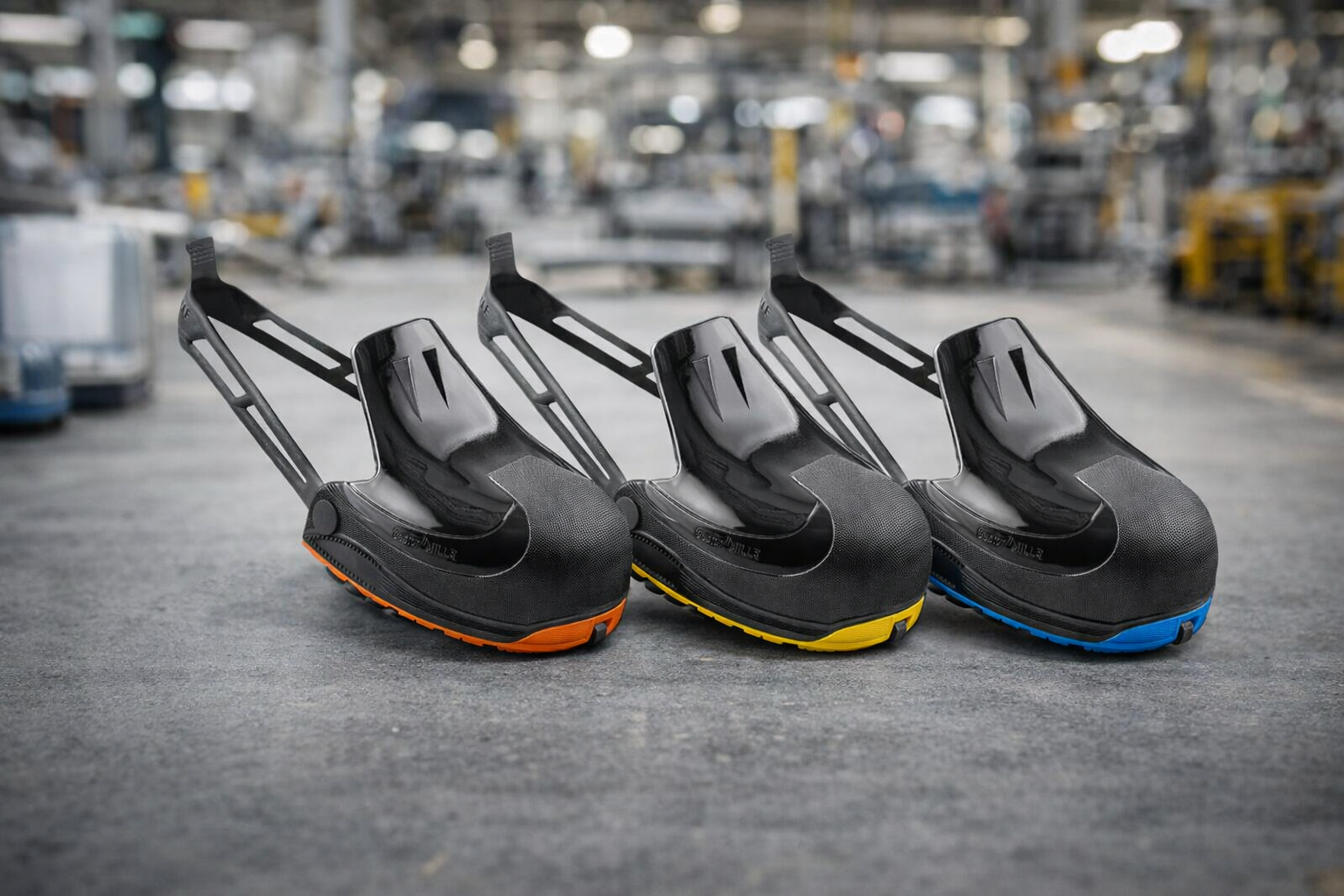
The S1 category offers basic protection. Antistatic and fitted with a heel shock absorber, it is suitable for dry environments such as showrooms or certain technical offices.
As soon as moisture appears (professional kitchens, cleaning areas), S2 becomes essential thanks to its water-repellent upper. For construction sites where nails and metal debris are present, only S3 with an anti-perforation sole guarantees real peace of mind.
Understanding S1, S2, S3 standards
Beyond the letters, understanding the markings makes all the difference. SRC certification reduces 90% of slips according to field feedback from ERIKS.
Frankly, the addition of CI guarantees thermal insulation down to -17°C, which is essential for cold rooms and industrial kitchens. Since 2025, stricter ergonomic requirements have gradually been imposed for flexion and tensile strength.
Job sectors and recommended categories table
| Sector | Category | Key criterion |
|---|---|---|
| Construction / Building | S3 or S3P | Mandatory anti-perforation |
| Catering | S2 + SRC | Water-repellent and slip-resistant |
| Logistics | S1P or S3 | Lightweight and durable |
| Medical / Laboratory | S2 + ESD | Reinforced antistatic protection |
Experts expect increased adoption (+20% estimated) of versatile safety overshoes to meet the needs of multi-environment professions. Precisely identifying your field constraints remains the only reliable criterion against standardized marketing claims.
How safety overshoes really work in the field
A false idea still persists: safety overshoes are said to be bulky, difficult to put on, or incompatible with regular shoes. That is inaccurate.
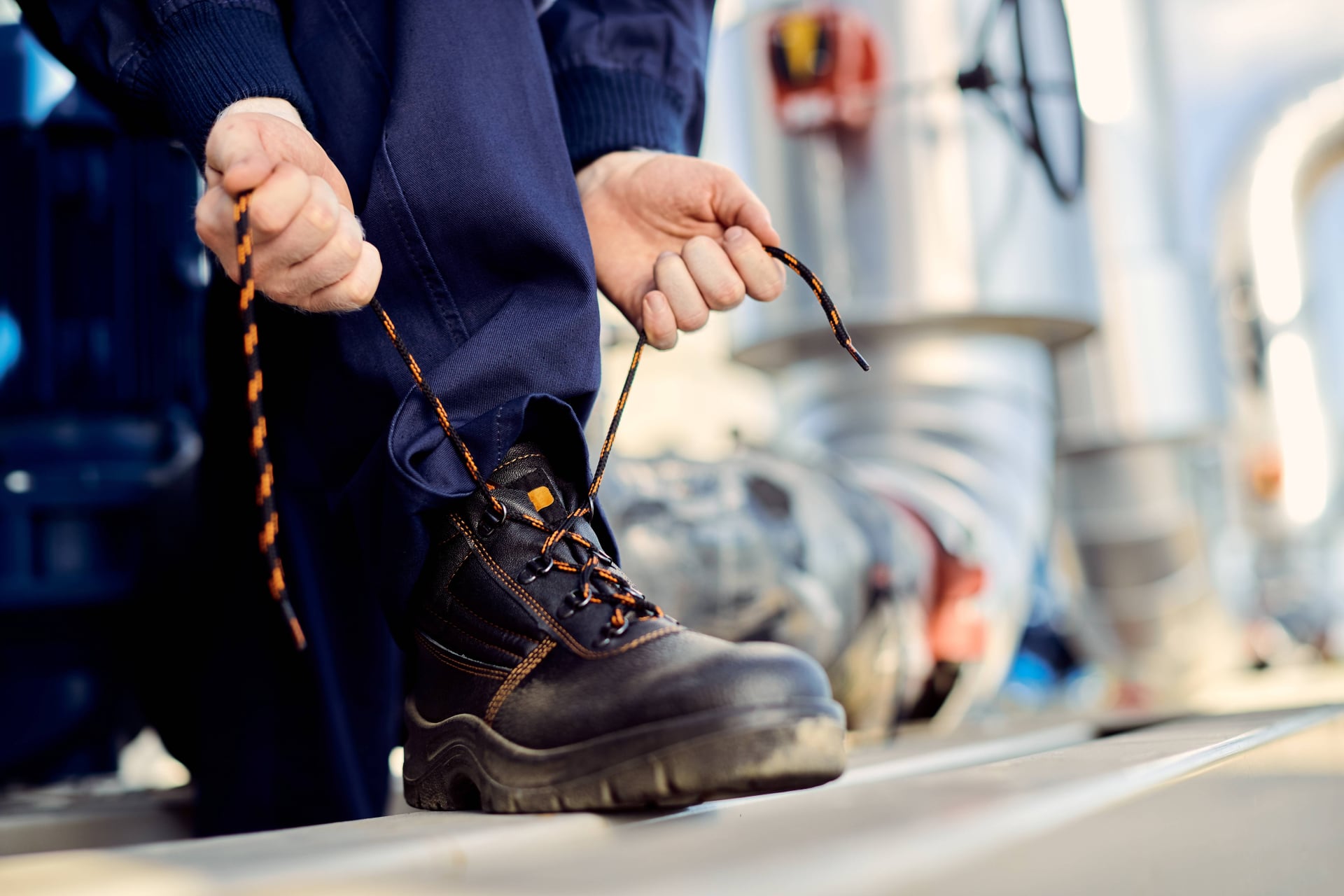
Frankly, this equipment slips on in less than 30 seconds over your city shoes, sneakers, or current ankle boots. Their quick fastening system, generally using hook-and-loop straps or reinforced elastic, ensures a precise fit without wasting time.
Unlike rigid boots, they offer immediate freedom of movement while guaranteeing protection that complies with European standards.
The 3 layers of protection that save lives
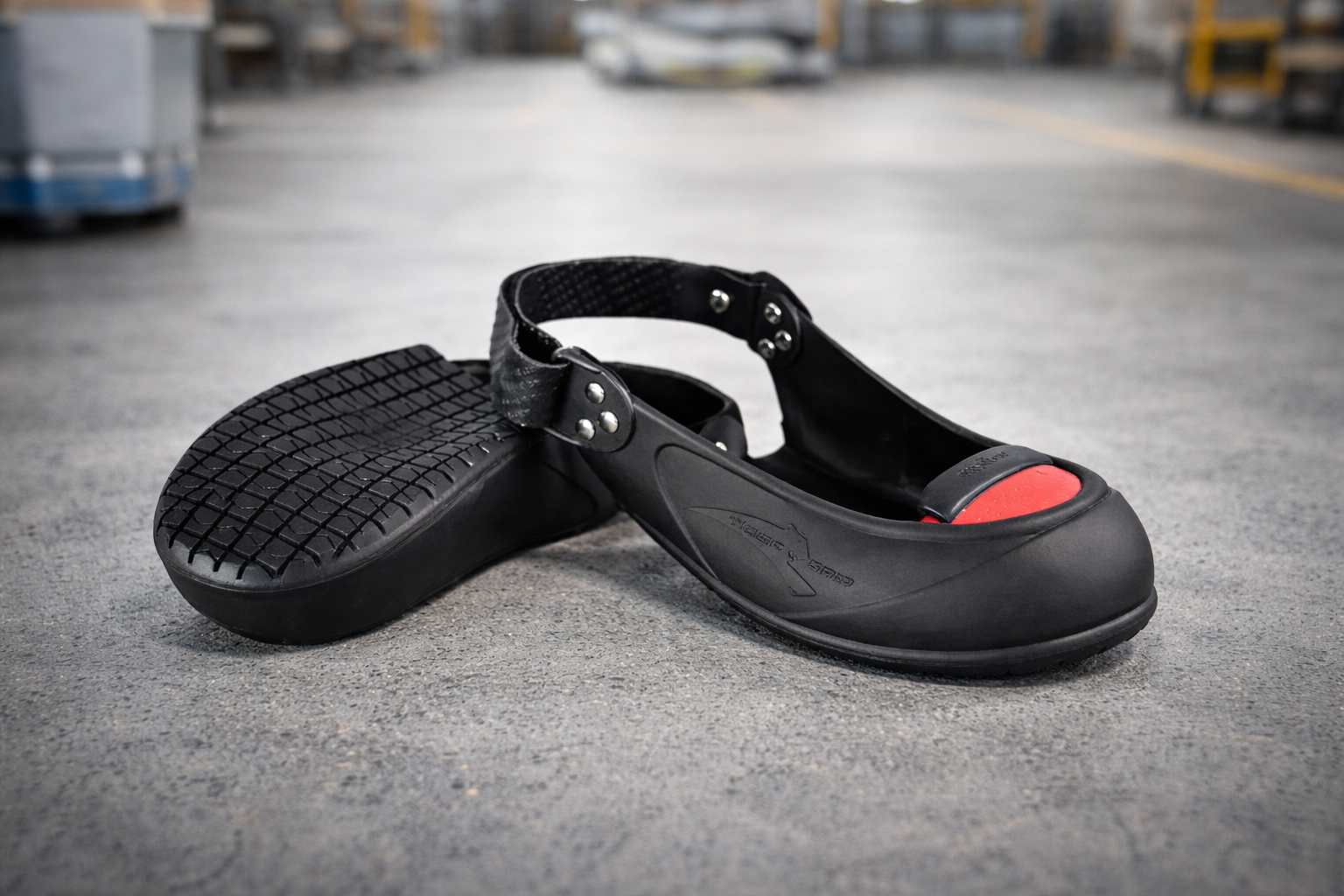
Each professional model combines three essential components. The anti-perforation sole, made of Kevlar or steel, stops nails and sharp debris.
Frankly, the toe cap protects your toes from impacts up to 200 joules. Breathable fabrics remove moisture to prevent maceration and lasting discomfort.
SRC grip, validated on wet ceramic and greased steel according to EN ISO 20345 standards, greatly reduces the risk of falls in industrial or logistics environments.
Discomfort and heaviness debunked
Many imagine excessive weight. Reality: a standard model weighs between 400 and 650 grams per pair.
Less than a bottle of water. Durability varies depending on usage intensity: 6 months for intensive daily site use, up to 18 months for occasional warehouse use.
Oxwork tip: Test how easily they slip on before buying. A good model should go on in 20 seconds max without forcing it.
5 sectors reducing accidents thanks to safety overshoes: concrete applications
Several industries have seen significant drops in accidents since requiring safety overshoes on their sites. Construction and structural work show notable results: falling heavy objects and nail punctures, two major causes according to INRS, decrease as soon as suitable S3P standards are adopted.
Testimonials from construction and industrial site managers
Field managers appreciate this versatility every day. A site manager in the Rhône region reports concrete results: fewer slips on wet slabs, zero punctures for six months. Frankly, in logistics, SRC slip-resistant soles reduce falls on smooth warehouse floors. ERIKS experts expect a 20% increase by 2026 for multi-skilled professions.
Where teams move between zones with varying risks.
Combined hygiene and safety in catering and medical sectors
La restauration collective choisit les modèles S2 avec isolation thermique CI pour ses cuisines froides. Le secteur médical et pharmaceutique utilise la surcouche hygiénique jetable qui protège visiteurs et patients.
Franchement, ces avantages combinés, propreté optimale et prévention des accidents, justifient l'adoption massive dans les collectivités.
What PPE suppliers do not tell you about safety overshoes
The real lifespan of safety overshoes remains a well-kept secret. Contrary to the promises displayed, some models lose their certification after only 3 to 6 months of intensive use.
Why? Slip-resistant soles wear out, inner seams deteriorate, and mechanical protection weakens long before the outer appearance shows visible wear.
According to current PPE standards, monthly inspection is required, but very few companies actually apply it.
The 3 purchasing traps that cost companies dearly
The online market is full of non-certified EN ISO models, sold 30 to 40% cheaper. Tempting.
But when an accident happens, lack of compliance exposes your company to legal action. Another trap: neglecting weight and inner seams.
A poorly designed model causes blisters and foot pain after only a few hours, reducing your teams’ productivity.
Maintenance and replacement: the schedule no one follows
Experienced professionals alternate between two pairs to maximize lifespan. Regular cleaning with suitable products helps maintain SRC grip.
Frankly, our team recommends replacement every 4 months for daily use, well before the first visible signs of wear appear.
Frequently asked questions about safety overshoes
Shoes and overshoes serve different purposes. The former are permanent PPE complying with S1 to S5 standards.
The latter? Temporary additional protection placed over existing footwear to preserve it or isolate it from contaminants.
Recommended wearing time: a maximum of 4 consecutive hours to avoid excessive compression and perspiration.
Construction site visitors: the legal obligation varies depending on the site’s single risk assessment document. Many sites require safety overshoes for unequipped visitors.
EN compliance? Check for integrated sewn-in labels mentioning the EN ISO 20345 or EN 13832 standard, never a simple removable marking.
Maintenance: avoid machine washing, which damages waterproof membranes. Hand cleaning with lukewarm water and mild soap is enough, with drying away from direct radiators.
Sizing? Always choose one size above your usual shoe size: the overshoe must slip on without constraint.
Test them with your actual work shoes, never with lightweight sneakers that would distort the fit.
Oxwork tip: Build a rotating stock by inspecting soles and seams after each 20-day cycle of intensive use. Invisible wear quickly compromises regulatory protection.
Choosing your safety overshoes with confidence
You now have the basics to equip your employees properly. How can you avoid useless purchases that end up forgotten in a cupboard?
Frankly, three criteria should guide your choice: compliance with PPE standards, suitability for your sector, and resistance to daily use. Safety leaves no room for approximation.
The 3 decisive criteria to avoid making the wrong choice
Always prioritize a field test before placing a bulk order. A pair that seems comfortable in a warehouse can become uncomfortable after four hours of standing.
When it comes to replacement, inspect your safety overshoes every three months for intensive environments (food industry, chemicals), and every six months for moderate use. As soon as a sole starts to come loose or a seam gives way, replace them without waiting.
PPE: Oxwork supports you in your choices
Our certified catalogue complies with all European standards and comes with technical support for QHSE managers. Are you comparing two models and looking for the right one?
Frankly, our experts study your job constraints and guide you toward the right equipment. Request a free audit of your collective protection needs.
Protect your teams right now with the right overshoes
Choosing safety overshoes requires real thought. You now have the essential elements to decide with full knowledge. Start by identifying the standard that matches your specific risks.
Then select the type suited to your sector of activity. Prioritize durability to optimize your costs over the long term. Frankly, assess the risk zones on your site right now.
Test several models with your teams before placing a bulk order. Oxwork supports you in selecting compliant PPE, with QHSE support included. Our team analyzes your field needs and offers solutions adapted to your budget.
Your employees deserve reliable and effective protection.