DE
DE  FR
FR  IT
IT 
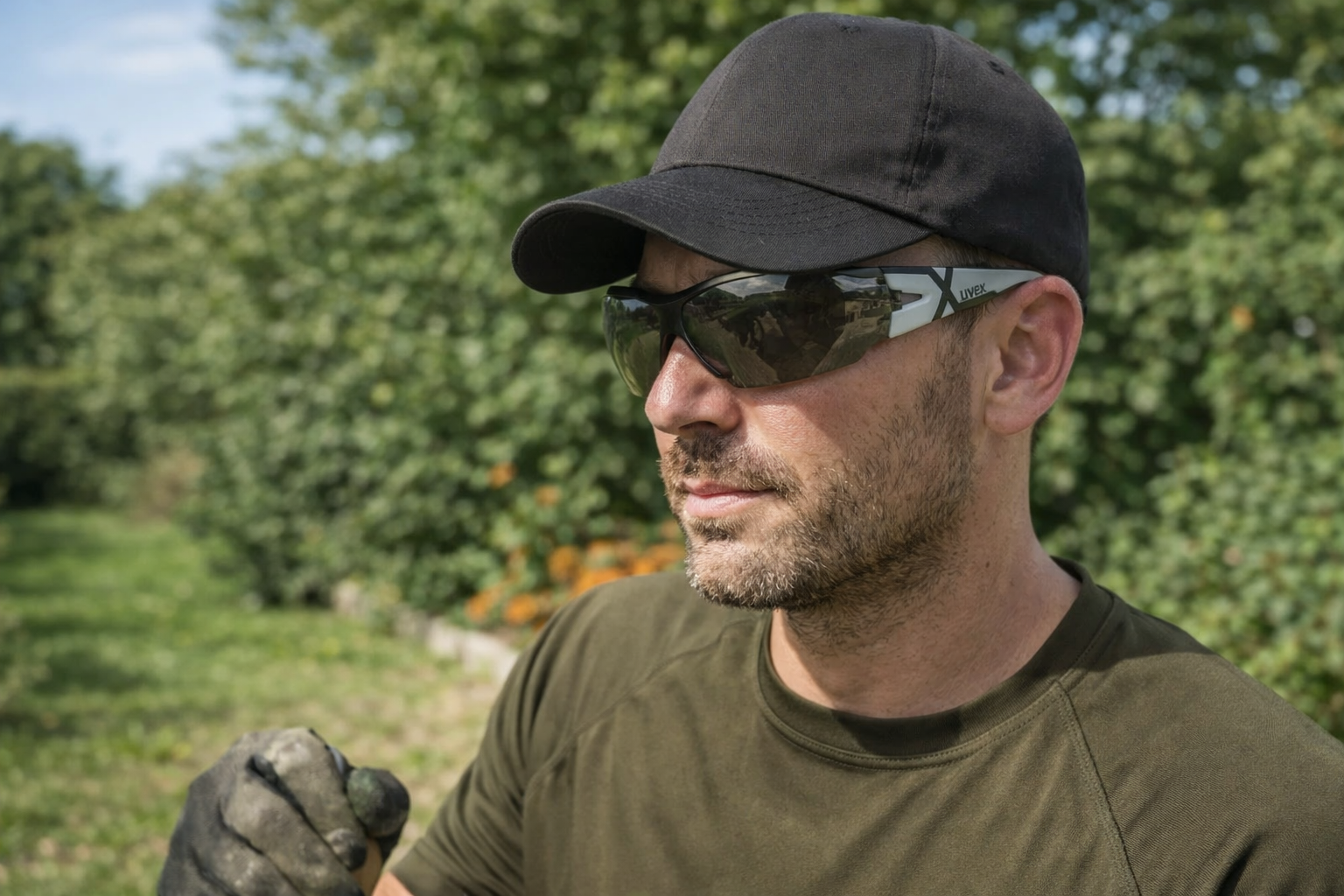
Summer workwear for landscapers combines thermal protection, breathability and compliance with EN ISO 20471 standards to ensure safety and comfort in hot weather.
- 8 categories of equipment tested according to strict QHSE criteria to withstand the demands of the trade
- Choose quick-drying technical fabrics to reduce the risks of dehydration and heatstroke
- The right outfit reduces heat fatigue and maintains your productivity all summer long
Working in temperatures above 35°C with unsuitable trousers causes intense fatigue by mid-morning. Choosing summer workwear for landscapers goes far beyond simple personal comfort. Regulatory visibility requirements, heatstroke risks and resistance to thorns require a rigorous selection.
Moreover, heatstroke accounts for 30% of summer accidents according to the CNAMTS. QHSE managers and professional buyers see that poorly suited equipment directly affects team health and site continuity. This article presents a selection based on 7 essential technical criteria for summer.
You will find a detailed analysis of lightweight trousers versus compliant work shorts. It also explains why comparing breathable fabrics for upper-body garments matters.
Frankly, it is worth noting that some protective accessories help prevent costly sick leave. The analysis explains why certain ventilated models offer better protection than standard alternatives. A comparison table makes choosing easier in just a few minutes.
Completed with field feedback from landscapers who tested this equipment in difficult weather conditions. You will understand what really matters when selecting high-performance gear to get through summer without compromising safety or budget.
Why the right summer equipment can save your season
Working in temperatures above 35°C with unsuitable equipment is not just uncomfortable. Landscaping professionals face concrete risks: heatstroke, severe dehydration, and UV-related skin burns.
Every year, health services record hundreds of incidents linked to prolonged sun exposure in this sector. Sick leave costs a company between €150 and €400 per day, not including the impact on productivity.
Good summer workwear for landscapers protects your teams while preserving profitability.
The real dangers of unsuitable equipment
A non-breathable fabric increases body temperature by 2 to 4°C. The result?
Dizziness, muscle cramps, and loss of concentration that increases accidents. Cheap synthetic fabrics create a sauna effect.
Worse still, the absence of UV protection causes cumulative skin damage. Our experience shows that poorly equipped teams lose up to 30% efficiency after 2 p.m.
What regulations really require
Labour law requires employers to provide equipment suited to weather conditions. In practical terms, this means lightweight long-sleeved garments, head protection, and certified anti-UV materials.
Frankly, an inspection can penalize any failure to comply with this rule. Here we present 8 essential categories validated by Oxwork to meet these obligations while ensuring comfort and durability in the field.
Oxwork: Our premium selection for demanding professionals
Our company stands out through a pragmatic approach to summer workwear for landscapers. No useless marketing.
Only products tested in extreme conditions by our field teams. Regulatory compliance is not enough: every item undergoes accelerated wear cycles before commercial approval.
The result? Product ranges that keep their promises, even after 200 industrial washes.
Why Oxwork dominates the professional market
Our B2B clients appreciate three concrete aspects of our service. First, our personalized sizing advice works well.
Our technical service takes your measurements over the phone to avoid unnecessary returns. Frankly, volume-based pricing starts from just 10 units, with no contractual minimum order.
Finally, guaranteed 48-hour delivery covers Paris, Lyon, Marseille, and Toulouse. Our logistics teams prioritize urgent orders, a rare advantage in the professional PPE sector.
The summer range in detail
Our new-generation fabrics combine recycled polyester and bamboo fibers for optimal sweat management. Abrasion resistance remains excellent. Frankly, all our high-visibility tops are certified EN ISO 20471 Class 2, with NF EN 340 compliance validated by a notified body.
Each pair of trousers includes stretch zones at the knees to make repeated crouching positions easier in landscaping work.
Our 7 non-negotiable evaluation criteria
Choosing summer workwear for landscapers requires more than simply reading a technical data sheet. Our team tests every garment in real field conditions. Hedge trimming in temperatures above 35°C, earthmoving in full sun, handling vibrating tools.
A high CFM rating on paper guarantees nothing if the cut blocks airflow. Frankly, we assess seven concrete parameters. Breathability with validated CFM measurements, UV protection (minimum UPF 40+ standard).
Abrasion resistance based on fabric weight and reinforced knee-elbow areas. You need to check NF EN 340 compliance, the ergonomics of repetitive movements, value for money for bulk purchases, and resistance to industrial washing.
The technical standards that really matter
Beyond marketing claims, three certifications separate reliable equipment from the rest. The EN ISO 20471 standard requires minimum fluorescent surface areas to ensure visibility.
Frankly, a UPF 50+ fabric blocks 98% of UV rays, compared with 85% for standard cotton. Fabric weight should fall between 200 and 260 g/m²: a lighter fabric risks tearing, while a heavier one overheats the wearer.
Our field tests also include the washing criterion: how many 60°C cycles can the garment withstand before the seams fail or the reinforcements come loose?
How we test field durability
We subject every product to a strict protocol: continuous wear for 40 hours a week on landscaping sites, handling thorny branches, repeated contact with abrasive ground and plant protection products. A team of professionals records fabric evolution, fastening wear, and knee deformation after 15 washes.
The models that survive this cycle join our selection.
Oxwork advice: Choose stretch fabrics with Cordura reinforcements rather than thick cotton. You gain 30% more freedom of movement without compromising durability.
Comfort without compromising protection in lightweight work trousers for summer
Wearing durable trousers in 30°C heat? Tough.
But sacrificing protection is not an option when you work on your knees in flower beds or handle a hedge trimmer all day. Summer trousers for landscapers combine fabrics ranging from 200 to 280 g/m² (compared with 300 g/m² for winter models) with reinforcements in critical areas.
Polycotton ripstop offers a good compromise: tear-resistant while still allowing proper airflow.
Technical fabrics that really release heat
Stretch side panels provide real comfort at work. You need to plant a hundred shrubs in one day to understand the importance of full freedom of movement.
Frankly, mesh fabrics placed behind the knees help wick away perspiration while preserving EN 14404 compliance for certified knee pads.
Pocket systems adapted to the job
Does your phone end up soaked in your chest pocket? Today’s trousers offer waterproof side pockets with zip closures.
Frankly, tool loops allow you to secure pruning shears without damaging the fabric. For roadside work, choose models with discreet and effective reflective bands.
When to choose them according to professional work shorts regulations
A great many companies still hesitate on this issue. Yet there is no general ban on wearing shorts on worksites.
The Labour Code simply requires the employer to carry out a risk assessment. Frankly, they must provide summer workwear for landscapers that is suited to the identified hazards.
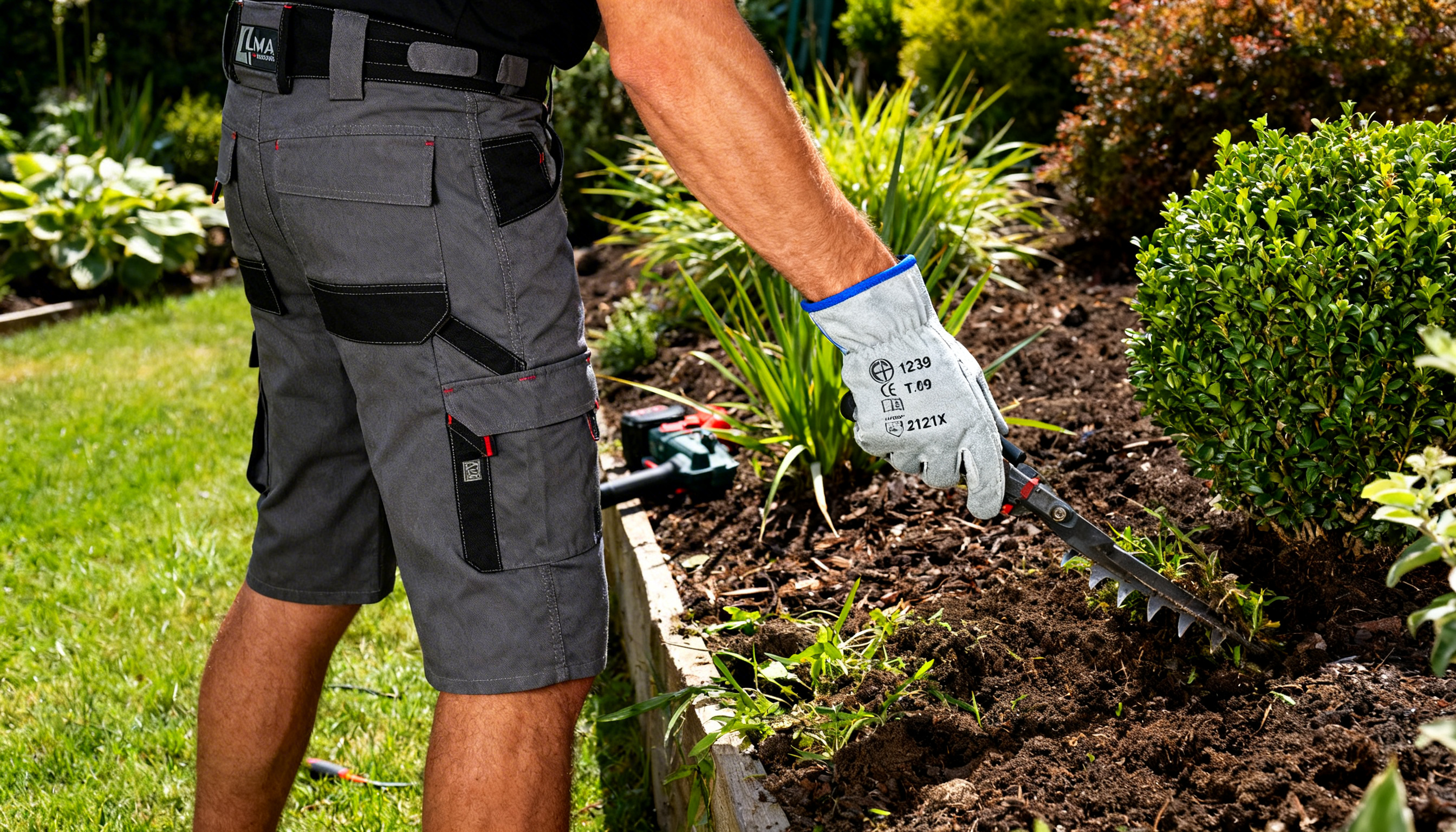
Shorts are still allowed for green space maintenance, mowing, or weeding without exposure to chemical products. On the other hand, pruning, the use of petrol brush cutters, or handling thorny vegetation require long trousers.
What the law really says about work shorts
Article R4321-1 requires that equipment protects against identified risks. The single risk assessment document determines whether shorts are acceptable. Frankly, some clients apply their own dress rules.
Some local authorities refuse shorts to preserve their institutional image, even during summer. You need to check the specifications before each job to comply with these requirements.
Essential technical features
Choose a fabric weight of at least 250 g/m² in cotton-polyester to withstand repeated friction. Longer versions, just above the knee, with knee pad pockets provide better protection during planting work.
Frankly, at least six pockets help distribute the weight of tools without creating imbalance.
Breathable polo shirts and T-shirts, the foundation of effective summer clothing
Technical textiles radically improve comfort in summer. Summer workwear for landscapers must wick moisture away quickly, not trap it like traditional cotton.
Polyester blends allow evaporation three times faster than a traditional fabric. Several manufacturers add antimicrobial treatments to reduce odours after eight hours of mowing in temperatures above 35°C.
Our team recommends UPF 50+ ratings for prolonged work: protection comparable to sunscreen, without reapplication.
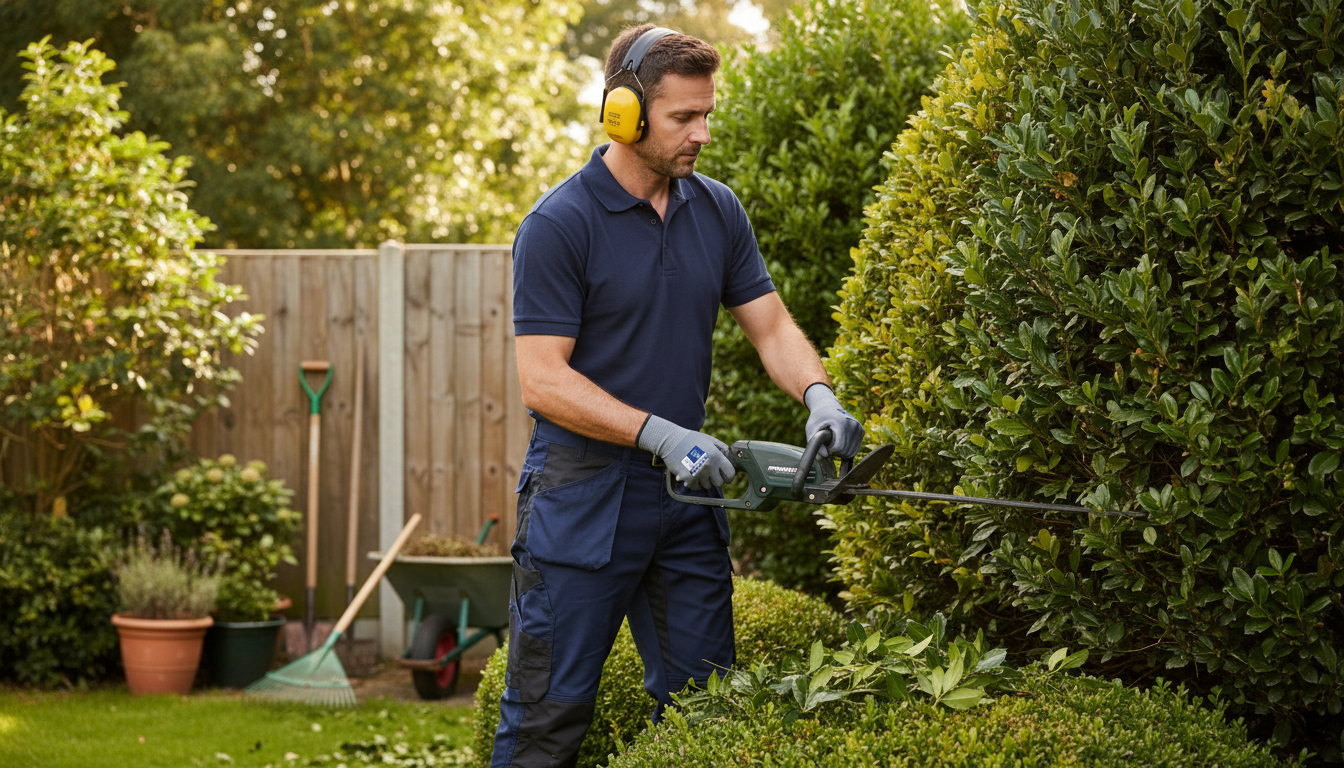
Short or long sleeves: the choice depends on temperature
Lightweight long sleeves offer better protection than standard T-shirts. They block 98% of UV rays and allow air to circulate between the skin and the fabric.
Frankly, on roadworks, choose high-visibility clothing in fluorescent yellow or orange with reflective bands compliant with EN ISO 20471.
Sweat-control technologies that actually work
Mesh panels under the arms speed up drying. Check resistance to repeated washing: some finishes lose their effectiveness after twenty cycles.
For logo embroidery, choose the left chest area, which is less exposed to harness friction.
Oxwork tip: Test your technical polo shirts before placing a bulk order. Wear one during an intense half-day of work: if you feel moisture building up on your back after two hours, the fabric is not suited to summer landscaping work rates.
What PPE sellers do not tell you about summer
Let’s now address the industry’s unspoken truths. A manufacturer may claim that a landscaper’s work garment is “tested according to EN ISO 20471”.
That wording does not guarantee any official certification. Frankly, a simple laboratory test does not prove regulatory compliance.
You face the same issue with so-called “breathable” fabrics that do not display a CFM value. Without this air-permeability figure, you cannot verify real performance.
You may be wearing a garment that feels as stifling as a plastic tarp.
Misleading certifications to avoid at all costs
The UV protection mentioned on the label? It drops sharply after five washes, yet no supplier points this out.
As for the confusion between EN 471 (former standard) and EN ISO 20471, it still exists among some less scrupulous sellers. Always check the certification date on the inside label.
The real cost of “cheap” calculated over 12 months
A pair of trousers costing 35 euros and replaced three times a year ends up costing 105 euros, compared with 80 euros for a durable model bought once. Reinforced seams and YKK zips make all the difference in terms of longevity.
Adjustable protection for changing temperatures: lightweight jackets and gilets
Gilets and lightweight jackets are the ideal summer protection combination for landscapers. The gilet is the go-to option on hot days: sleeveless, it frees the shoulders while still providing visibility and functional pockets.
The lightweight jacket takes over when the weather becomes uncertain. Choose technical fabrics around 180-220 g/m² that resist tearing without adding weight.
A multi-pocket system (6 to 8 compartments) makes it easy to store pruning shears, tape measure and phone without wasting time searching.
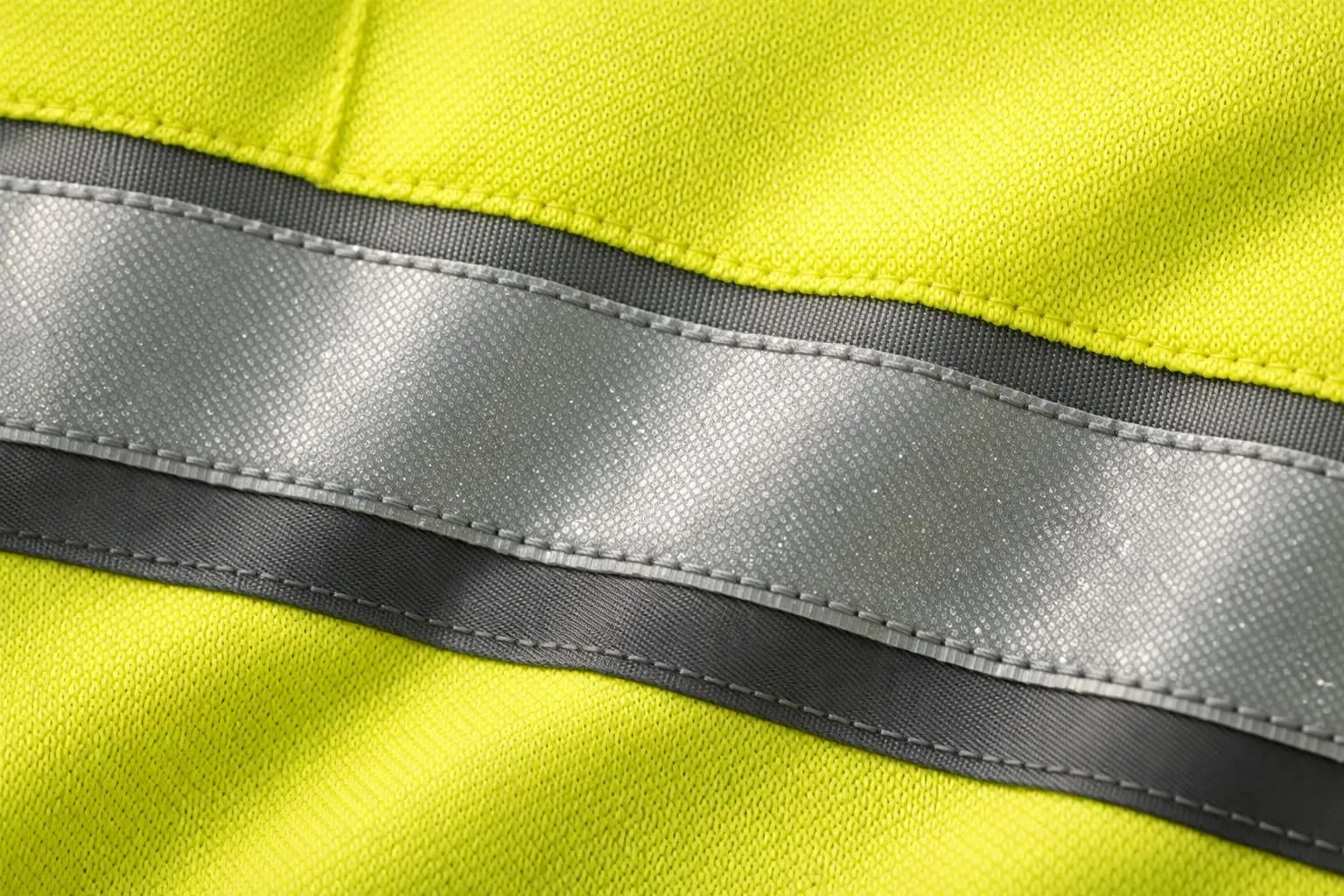
Detailed legal requirements for high-visibility gilets
The EN ISO 20471 standard defines visibility requirements for professionals exposed to road traffic. Landscapers working near roads must comply with at least Class 2. This class requires 0.50 m² of fluorescent material and 0.13 m² of retroreflective bands.
Frankly, Class 3 provides better protection with long sleeves and a larger reflective surface area. It is better suited to high-traffic areas. The bands must ensure full 360° visibility, especially around the waist and shoulders.
A dirty or overly worn gilet is no longer compliant with standards.
Ventilation systems to prevent overheating
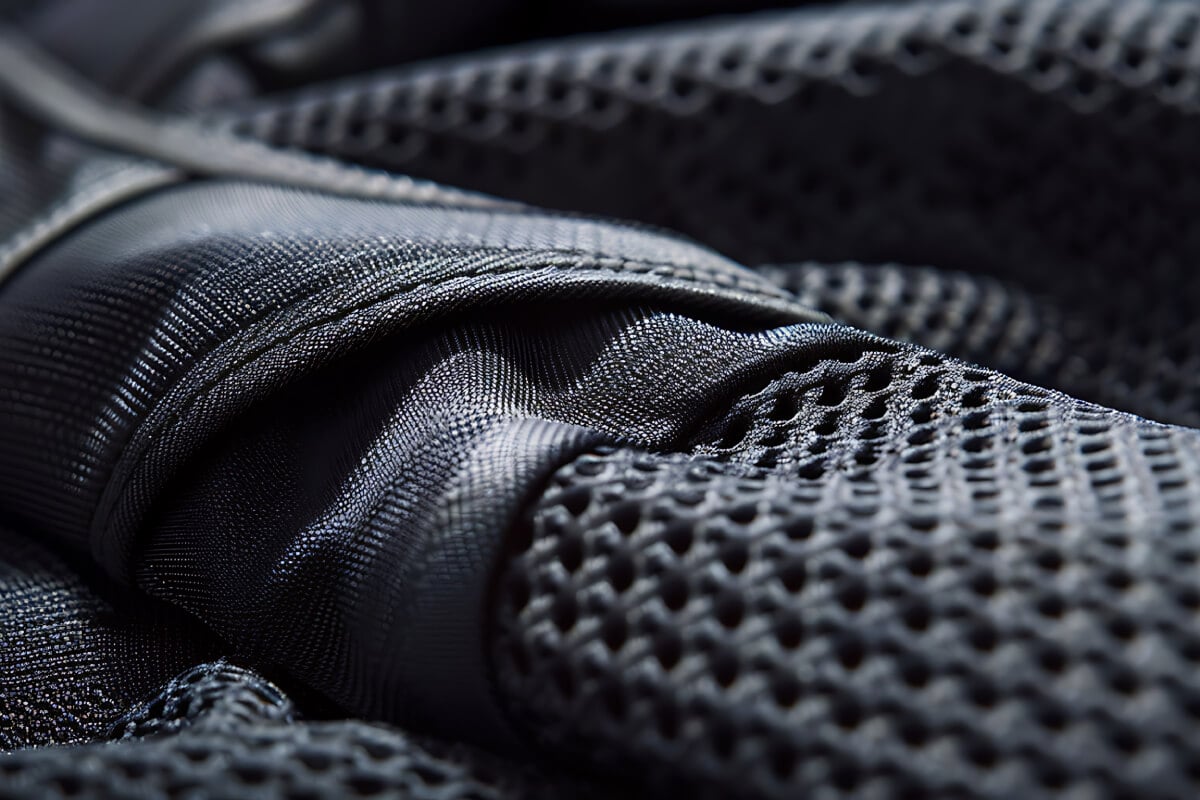
Breathable polyester mesh membranes with lining help wick away moisture while maintaining protection. Choose perforated zones under the arms and on the back to encourage airflow during activity.
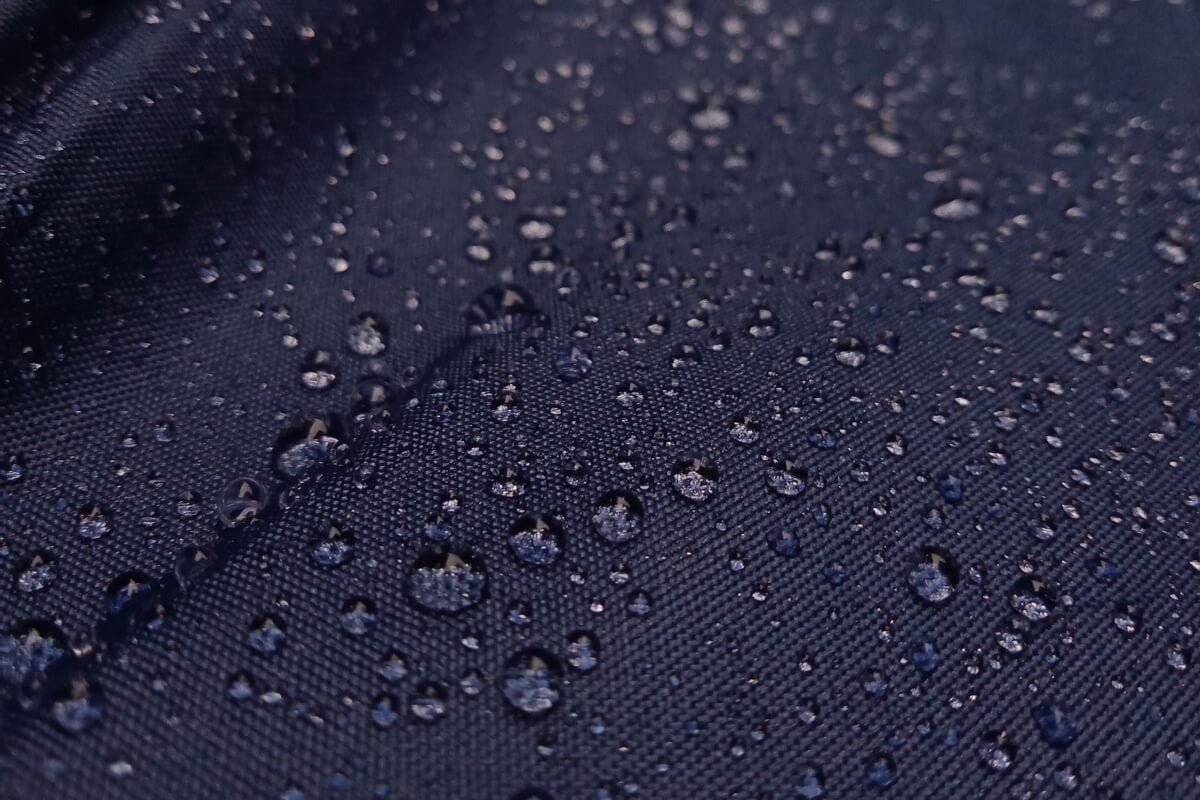
Frankly, several models feature side zips that adjust ventilation according to effort intensity. A water-repellent DWR treatment protects against light rain without preventing perspiration from escaping.
This technical combination prevents overheating and keeps the torso dry when exposed to water spray or morning dampness.
Ventilated safety shoes: comfort that protects your feet
Ten hours standing on uneven ground. Your feet sweat, heat up and swell.
Frankly, you still need to maintain protection against punctures and impacts. The challenge of summer workwear for landscapers lies in this balance between maximum safety and effective breathability.
Modern ventilated shoes meet these requirements thanks to advanced technologies integrated from the design stage.
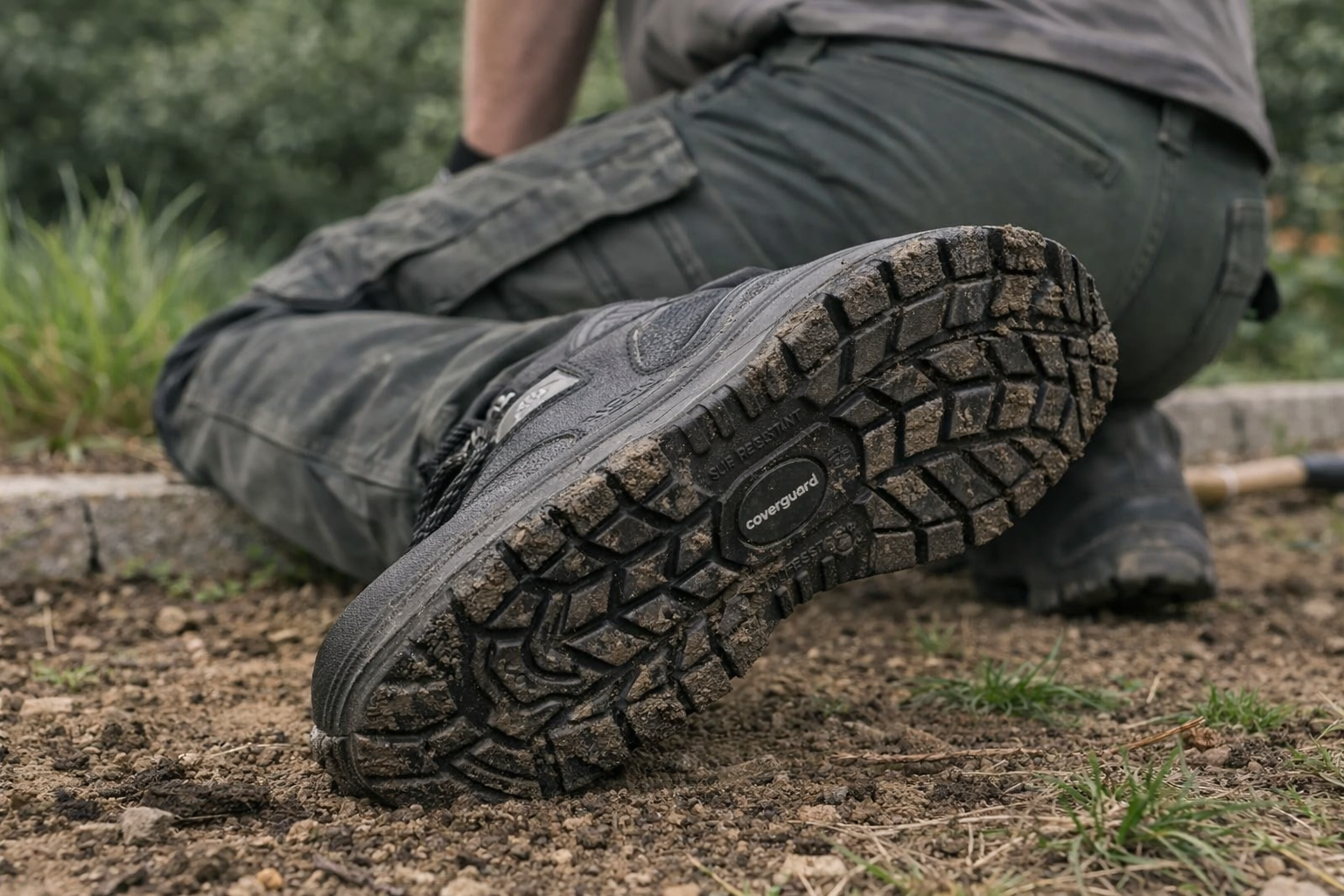
Understanding S1P and S3 standards for landscapers
The EN ISO 20345 classification sets the levels of protection required for each use. S1P is sufficient for dry green spaces thanks to its 200-joule resistant toe cap.
It includes a puncture-resistant sole and energy absorption at the heel. Frankly, S3 offers greater durability thanks to its water-repellent upper and lugged sole, both essential on muddy ground.
This waterproofing does limit foot ventilation. Our clients prefer S1P in summer and keep S3 for rainy jobs or permanently wet areas.
Ventilation technologies that actually work
Mesh panels on the sides wick away moisture while preserving structural strength. Several models use technical polyester linings that draw perspiration away through capillary action.
Frankly, be careful: a shoe that is too ventilated lets in dust and plant debris. The ideal approach combines targeted perforations with a flexible protective tongue.
Weight also matters: every gram saved adds up over several kilometres during a full working day.
Caps and sun-protection hats, the first line of defence
Eight hours under the summer sun without suitable protection comes at a price. Sunburn, heatstroke and accelerated skin ageing.
Summer workwear for landscapers starts with proper head coverage. But between a classic cap, a wide-brim hat and a bucket hat with neck protection, which one should you choose?
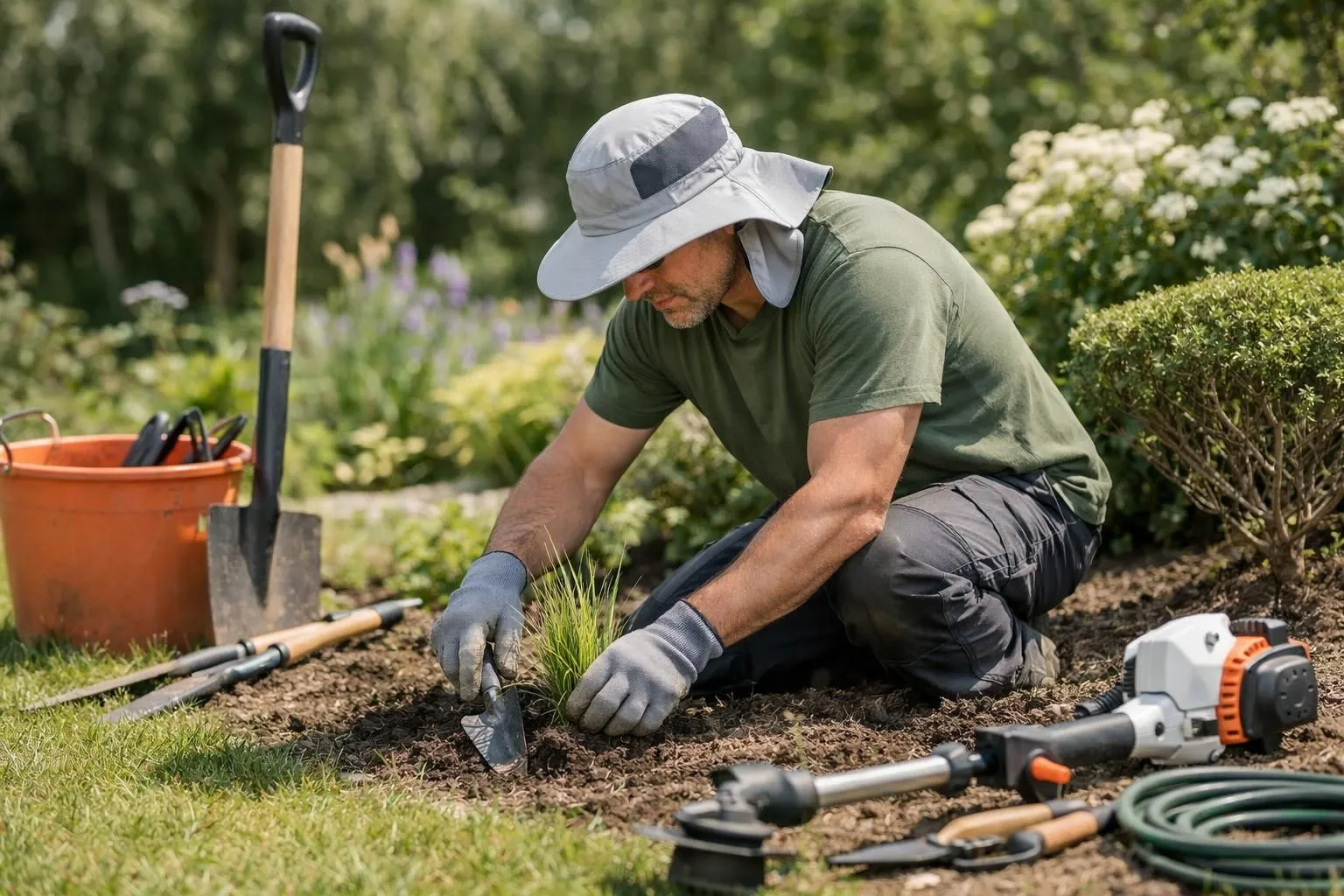
Which shape offers the best overall protection
A cap protects the face, nothing more. A bucket hat covers the ears better, but often leaves the neck exposed.
A wide-brim hat with a removable neck flap remains the best option for landscapers: 360° coverage, compatible with protective eyewear, and an integrated chin strap to withstand the wind. Check the fabric’s UPF 50+ certification, the only real guarantee of effective UV blocking.
After one hundred washes, low-end anti-UV fibers lose their effectiveness. Choose materials with mechanical protection (tight weave) rather than chemical treatments that fade over time.
What still works after 100 washes of anti-UV materials
Integrated sweatbands wick away perspiration without soaking the forehead. Look for models with a polyester mesh headband, ventilated side panels, and reflective strips for worksite visibility.
Compatible with hearing protection? Test the fastening system before buying.
EN 14404 explained for non-experts
This European certification ensures protection against impacts and prolonged kneeling support. You currently have two options available on the market. Type 1 integrates the pads directly into the trousers, which is practical but limited.
Frankly, Type 2 uses adjustable straps that work with different summer garments. Choose EVA foam or gel models for better breathability. Thick neoprene protectors quickly become uncomfortable when temperatures rise above 25°C.
Often-forgotten additional protection
Anti-vibration gloves protect you from musculoskeletal disorders linked to brush cutters and hedge trimmers that generate vibrations above 2.5 m/s². You should wear moulded earplugs that reduce noise by 25-30 dB and apply SPF 50+ sunscreen every two hours.
Frankly, this additional protection can extend your professional career well beyond the age of 54, the average age of leaving the trade according to (See also: professional data).
Comparison table: the 8 categories at a glance
Eight equipment families are currently available on the market. You need to identify the one that matches your limited budget. Frankly, this table presents the essential criteria for each category of summer workwear for landscapers.
You will find the level of protection, breathability, estimated lifespan, and price range. You can therefore compare efficiently before finalising your professional purchases.
| Category | Protection | Breathability | Average lifespan | Unit price (€) | Standard |
|---|---|---|---|---|---|
| Reinforced trousers | High abrasion resistance | Medium | 18-24 months | 60-120 | EN ISO 13688 |
| Technical polo shirts | UV 50+ | Excellent | 12-18 months | 25-55 | EN ISO 20471 |
| Safety shoes | S1P / S3 | Variable | 10-14 months | 70-150 | EN ISO 20345 |
| Multi-purpose gloves | Cut resistance A1-A3 | Good | 3-6 months | 8-25 | EN 388 |
| Caps / hats | Sun protection | Maximum | 24+ months | 12-35 | — |
| Lightweight waterproof jackets | Light rain | Medium-high | 18-30 months | 50-110 | EN 343 |
| Protective eyewear | Impact / UV | — | 12-24 months | 15-40 | EN 166 / EN 172 |
| Knee pads | Impact / abrasion | Low | 12-18 months | 20-60 | EN 14404 |
How to read this table for your situation
Excellent breathability means fast moisture wicking, a major criterion in temperatures above 30°C. The lifespan column reflects intensive use five days a week.
Frankly, for group purchases from as few as three people, several B2B suppliers offer volume discounts of 10 to 20% on trousers and polo shirts. Check the INRS fact sheets to explore each cited standard in more detail.
Where to start investing with an optimal budget
Start with S1P shoes and reinforced trousers to reduce serious injuries and avoid worksite interruptions. Then add high-visibility polo shirts if your teams work near roads.
Frankly, gloves and caps come last. Their modest cost allows regular replacement without weighing on your budget.
What landscapers think in the field
Opinions converge on one point: mechanical ventilation remains the number one criterion. Not easy when you spend eight hours in 35°C heat trimming hedges.
Professionals prefer technical fabrics with mesh panels on the back, even if they cost €15 to €20 more per item. Many give up cotton after one season because it becomes too heavy once damp.
What really makes the difference during a heatwave
Reinforced knees rarely live up to their promise beyond six months. The seams fail before the main fabric.
QHSE managers also note a gap between EN ISO standards and real-life use: a certified garment can still remain uncomfortable all day. Brand loyalty depends less on price than on the fast availability of sizes, a decisive criterion for companies with more than ten employees.
Ce qui fait vraiment la différence en canicule
UV protection becomes necessary as soon as the thermometer reaches 30°C in direct sunlight. You can find technical fabrics certified UPF 50+, but product sheets often lack precision on this point. Frankly, teams in rural areas prefer light shades such as beige or pearl grey.
Urban landscapers tend to choose black to hide stains and oil residue. Even if that costs them two degrees of comfort.
Frequently asked questions about summer workwear
Professionals regularly ask questions about regulations and the maintenance of their summer equipment. The first common confusion is the difference between summer workwear for landscapers and mid-season clothing.
In mid-season, long sleeves are still recommended depending on the temperature and the tasks to be carried out. Summer requires breathable fabrics with efficient drying for greater comfort.
Another frequent question: are shorts allowed on worksites? That depends on the worksite.
Frankly, some clients require long trousers, especially near cutting equipment or on uneven ground.
Technical textile care requires special attention. Wash at a maximum of 30 to 40°C, without fabric softener, which clogs the breathable fibers of the fabric.
Average lifespan of professional trousers: 12 to 18 months depending on intensive daily use. As for high visibility, the reflective gilet compliant with EN ISO 20471 becomes mandatory only on urban worksites or public roads.
For sleeves, choose long ones despite the heat: better UV protection and less irritation from vegetation.
The 3 first actions to take this week
- Audit your current stock: which items are reaching the end of their service life?
- Check your Single Risk Assessment Document (DUER) to identify the mandatory PPE required under labour law
- Contact Oxwork for a personalised quote suited to your activity
Order now to avoid stock shortages in peak season. Your teams’ compliance and comfort are worth the investment.
Conclusion: equip yourselves intelligently for summer
Choosing the right summer workwear for landscapers changes everything. You work more comfortably, for longer, and with fewer risks.
The 7 criteria we have detailed give you a solid framework for evaluating each item. Breathability, UV protection, durability: no compromises to make.
Start by auditing your current equipment. Identify what is missing before the major heatwaves arrive.
Want to be sure you are making the right choices for your team? The Oxwork team understands field constraints and can guide you toward the solutions best suited to your activity.
Investing in the right equipment means protecting your health and your productivity throughout the summer.